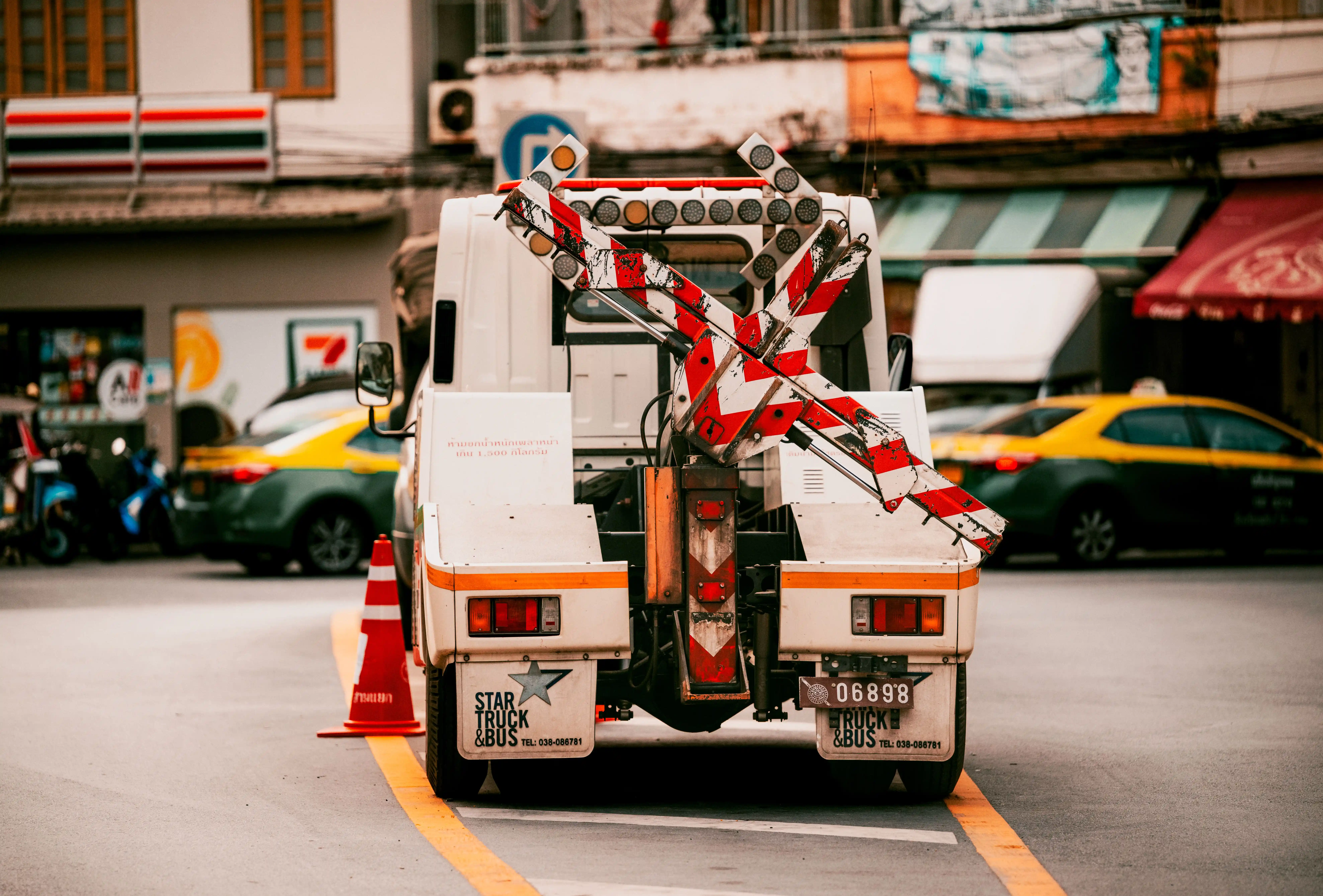
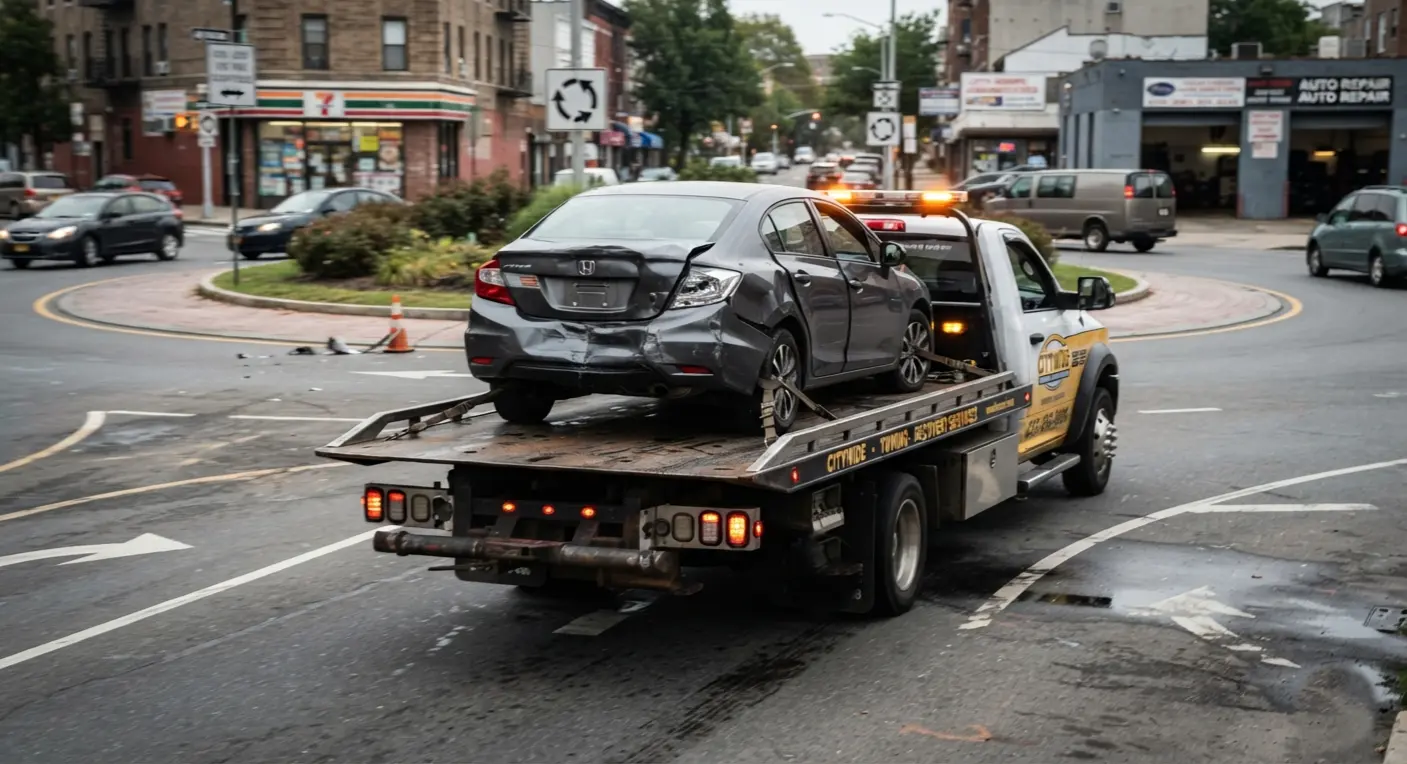
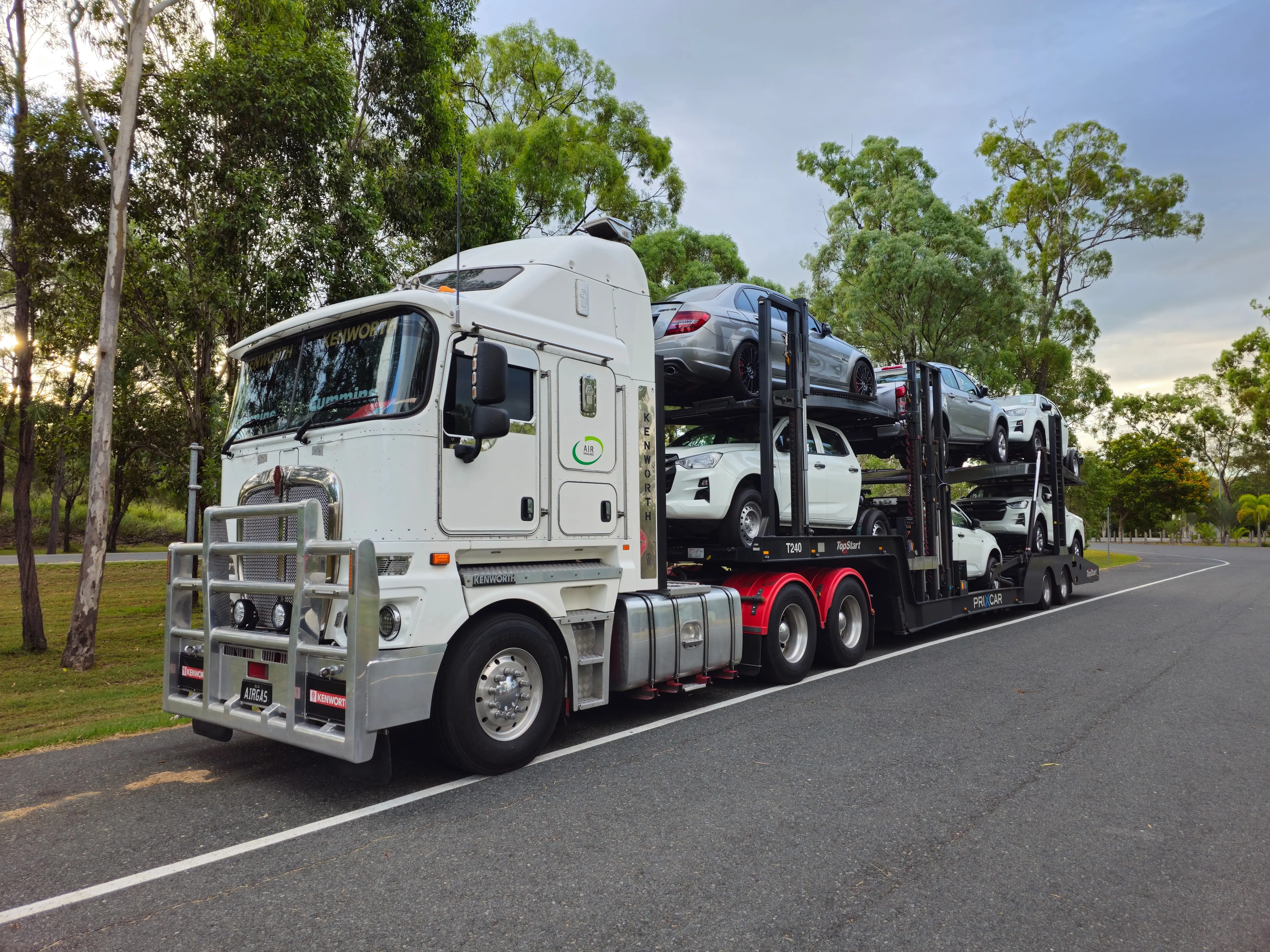
A car stopped on the hard shoulder is uncomfortable and, more to the point, unsafe. In San Sebastián we take breakdown calls at any hour of the day or night, with flatbed vehicles that move the car without putting any further strain on it and without adding kilometres to an engine that is already in trouble.
In San Sebastián it is routine to move vehicles that are crossing into another country or have just entered Spain. It pays to confirm before loading that the plates, ownership and insurance all match what is actually being done.
What makes San Sebastián different
San Sebastián's terrain and street layout restrict access for long vehicles in several areas. The AP-8 and A-1 are the main routes out towards Bilbao and the plateau.
Being close to Irún and the French border makes cross-border vehicle moves routine here. For general background on the area, the San Sebastián entry on Wikipedia covers the basics.
What the law says about moving a vehicle that cannot be driven
Spanish law draws a clear line between a vehicle fit for the road and one that is not. Where the ITV has lapsed, insurance has ended, or the vehicle is on temporary deregistration, driving it stops being legal and the Dirección General de Tráfico (DGT) can penalise it.
Beyond Royal Decree 920/2017 governing the ITV roadworthiness test, road transport of vehicles is subject to operating requirements overseen by the Spanish Ministry of Transport, including transport authorisation and goods-in-transit insurance.
What changes when the car is electric
A broken-down electric vehicle has requirements of its own. It cannot be towed with driven wheels on the ground, because the motor would spin as a generator, and any handling has to respect the high-voltage system, which operates at genuinely dangerous voltages.
If the call-out is simply a depleted traction battery, the vehicle will not move under its own power and flatbed transport is the normal procedure. If there is any sign of battery damage — smell, smoke or deformation — the situation changes completely and needs a specific protocol.
Realistic response times
Arrival time depends on the exact location, the hour, traffic and whether a suitable vehicle is available nearby. A call from an urban street mid-morning gets attended faster than one from a mountain road at three in the morning.
What should always be given is an honest estimate. A deadline promised without asking where the vehicle is means nothing, and produces a worse wait than a realistic figure given up front.
What determines the price of a recovery
Price depends on the distance between collection and destination, the vehicle type, how difficult the access is, and the time of day. A night or public holiday call-out costs more, for obvious reasons of availability.
What should not happen is unannounced extras appearing at the end. Charges for awkward access, for a non-rolling vehicle, or for out-of-hours work belong in the original quote.
On international moves from San Sebastián, insurance validity in the destination country is the point most worth verifying before loading.
Where we take the vehicle
The destination is the owner's decision, not the recovery operator's. It can be a specific garage, your home, a dealership, or an agreed holding point if the garage is closed. That freedom of choice is one of the real differences from the assistance bundled into many policies.
If the destination garage is shut, it is worth agreeing where the vehicle will sit safely and who holds the keys. Leaving it on a public street without arrangement tends to create problems.
Insurance assistance versus booking direct
Assistance included in your policy covers many situations and is worth using when it applies. But it has limits that catch people out: a maximum towing distance, a destination fixed to the nearest approved garage, exclusion of vehicles without a valid ITV, and on some policies a capped number of call-outs per year.
Booking direct makes sense when you want to choose the destination garage, when the distance exceeds what the policy covers, when the vehicle has no valid ITV, or when the waiting time offered is simply not acceptable.
Why a flatbed beats a tow
A flatbed carries the whole vehicle on the deck with all four wheels off the ground. That removes tyre wear, spares the transmission a rotation it was never designed for while stationary, and avoids damage to whichever axle would otherwise be rolling.
On vehicles with automatic gearboxes, four-wheel drive or electronic traction systems, a flatbed is not a preference but a manufacturer requirement. Towing with driven wheels in contact with the road can cause serious drivetrain damage.
Cover and liability during transport
Before handing keys to anyone, ask one specific question: is the vehicle covered while it sits on the transporter, for how much, and against what. An operator working legally and registered with the Spanish Ministry of Transport can evidence that without difficulty.
The carrier's cover is not the same as your own motor policy. Your insurance covers driving; during transport it is the carrier's goods-in-transit policy that responds. Confusing the two is behind most of the disputes that arise.
Other services in San Sebastián
You can read more about breakdown recovery or browse all our services. For a specific quote in San Sebastián, the quickest route is to get in touch.
Points to review in San Sebastián
Flag it if the vehicle has stood unused for a long period. Flat tyres, seized brakes or a completely dead battery all change how it has to be loaded.
Check the handbrake works and that the vehicle can be secured on the deck. If it cannot, there are solutions, but it is better known in advance.
If the move is a private sale, coordinate payment and key handover clearly. The carrier moves the vehicle; it takes no part in the transaction.
If the vehicle has been in an accident, say what is damaged and whether the wheels still turn. A vehicle that will not roll needs a winch and sometimes dollies.
If the vehicle contains fuel cans or any flammable material, remove it beforehand. Dangerous goods transport is governed by its own regulations and cannot travel mixed in with the vehicle.
Leave the fuel tank low, around a quarter. It reduces weight, follows standard transport practice, and there is nothing to gain from a full tank during the journey.
Open transporters are the standard option and perfectly safe for most vehicles. Enclosed transport makes sense for classics, high-value cars and anything with very low ground clearance.
Know where the spare wheel and tools are if the vehicle carries them. On long moves, a loose item in the boot shifts during the journey and can damage the interior or the trim.
Check whether your own policy covers the vehicle while it sits at a third-party workshop or compound. It is a frequent gap between the end of transport and the start of repair, and worth clarifying.
An accessible collection point saves both time and money. If the street is narrow or the garage has restricted headroom, agreeing a nearby spot where the truck can manoeuvre simplifies everything.
Ask whether the price includes waiting time at loading and unloading. On moves to workshops, dealerships or compounds with slow procedures, that time can stretch, and it is worth knowing in advance how it is counted.
Realistic timescales depend on distance and route, not optimism. A company that promises any deadline without asking where the vehicle is probably will not meet it.
If the vehicle will sit on a public street waiting for collection, check there are no timed restrictions or scheduled clearing on that road. A car towed by the local authority while waiting for transport complicates matters considerably and adds costs nobody planned for.
Bear in mind that in peak periods — summer, or the start and end of the season — lead times stretch. Booking ahead is the simple way around it.
A vehicle leaking oil or fuel should be flagged before transport. It does not prevent the move, but it affects where the car sits on the deck and what protection goes underneath it.
Agree who signs for the vehicle at the destination. If it arrives at a closed workshop or an address where nobody is present, the driver cannot simply leave it, and waiting time or a second attempt both cost money.
Before confirming, check the quote is fixed rather than an estimate subject to surcharges. Extras for difficult access or a non-rolling vehicle should be clear from the outset.
Get the name and number of the driver handling the job, or at least a direct operational contact. On the day, being able to resolve a question in two minutes prevents an hour of waiting.
If the vehicle is in an underground car park, check the clearance height first. Many garages cannot take a transporter and the car has to be brought up to street level.
Battery condition matters even for a transport job. If the vehicle has to move a few metres under its own power to get out of a garage or a parking bay, a live battery saves time and avoids resorting to auxiliary equipment.
If you need the vehicle by a fixed, immovable date, say so when booking rather than afterwards. With enough notice it can almost always be accommodated; with twenty-four hours, often not.
If the vehicle is on rural land or at the end of an unsurfaced track, state the distance from the tarmac road. An articulated truck cannot enter every lane, and sometimes the car has to be brought out to a meeting point.
In low-emission zones, verify whether the transport truck can enter during the planned time window. Many restrictions apply to heavy vehicles even where the car being carried would itself be allowed through.
If you are selling the vehicle and the buyer arranges transport, put in writing when responsibility passes. It is normally at key handover, but both parties benefit from having it stated.
On vehicles with large-diameter wheels and low-profile tyres, the approach to the ramps needs more care. It is worth mentioning so the right angle is prepared and the tyre or rim is not scuffed.
Before the truck arrives, take the documentation, spare keys and anything valuable out of the vehicle. It travels unaccompanied, and items left inside are not covered as luggage.
In summary
In short: in San Sebastián what makes the difference is a realistic timescale, a fixed price with no extras, and a move documented from start to finish. That is exactly what we provide, at any hour.
Need recovery in San Sebastián?
Flatbed transport to the destination you choose, insured. Fixed quote, no obligation.