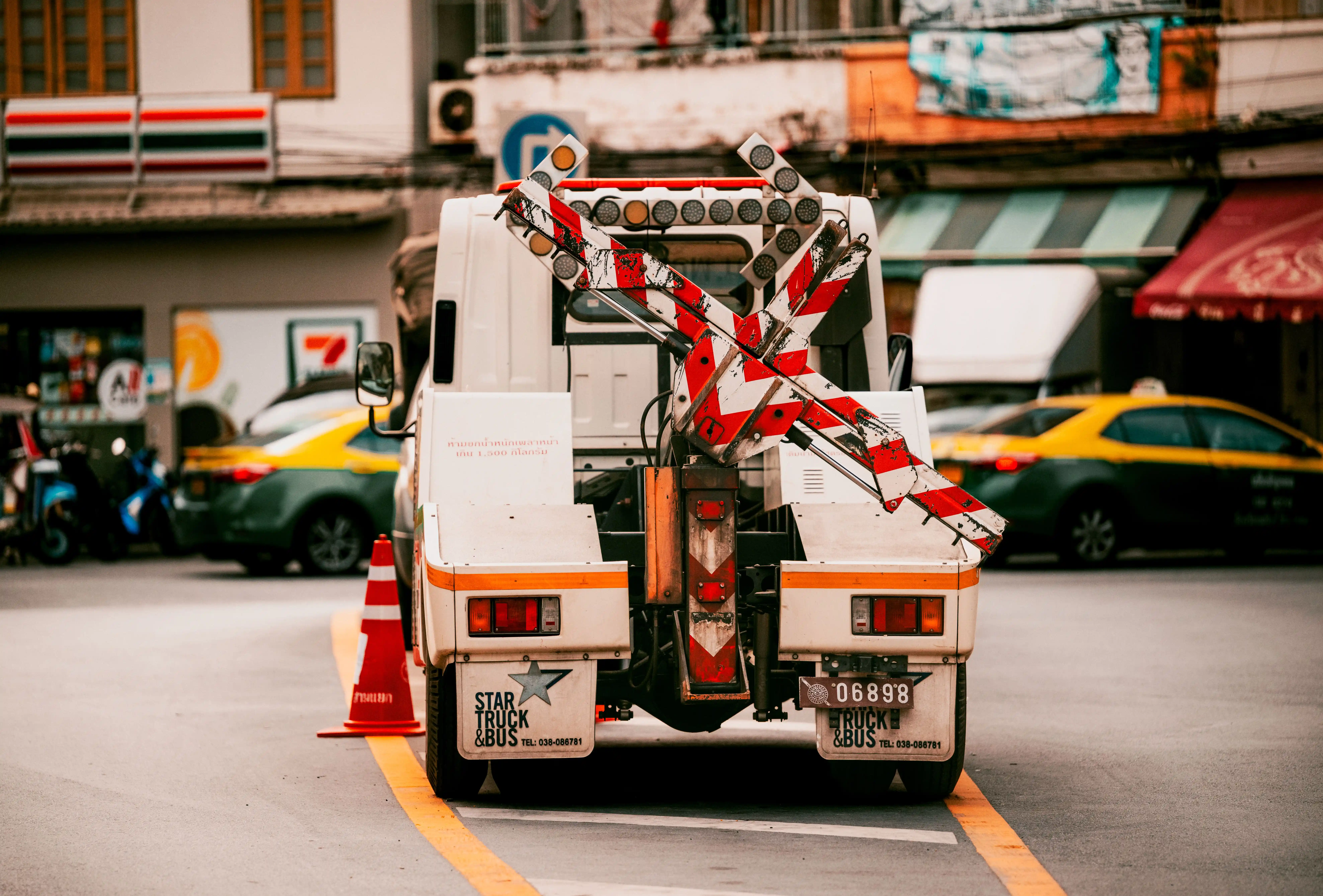
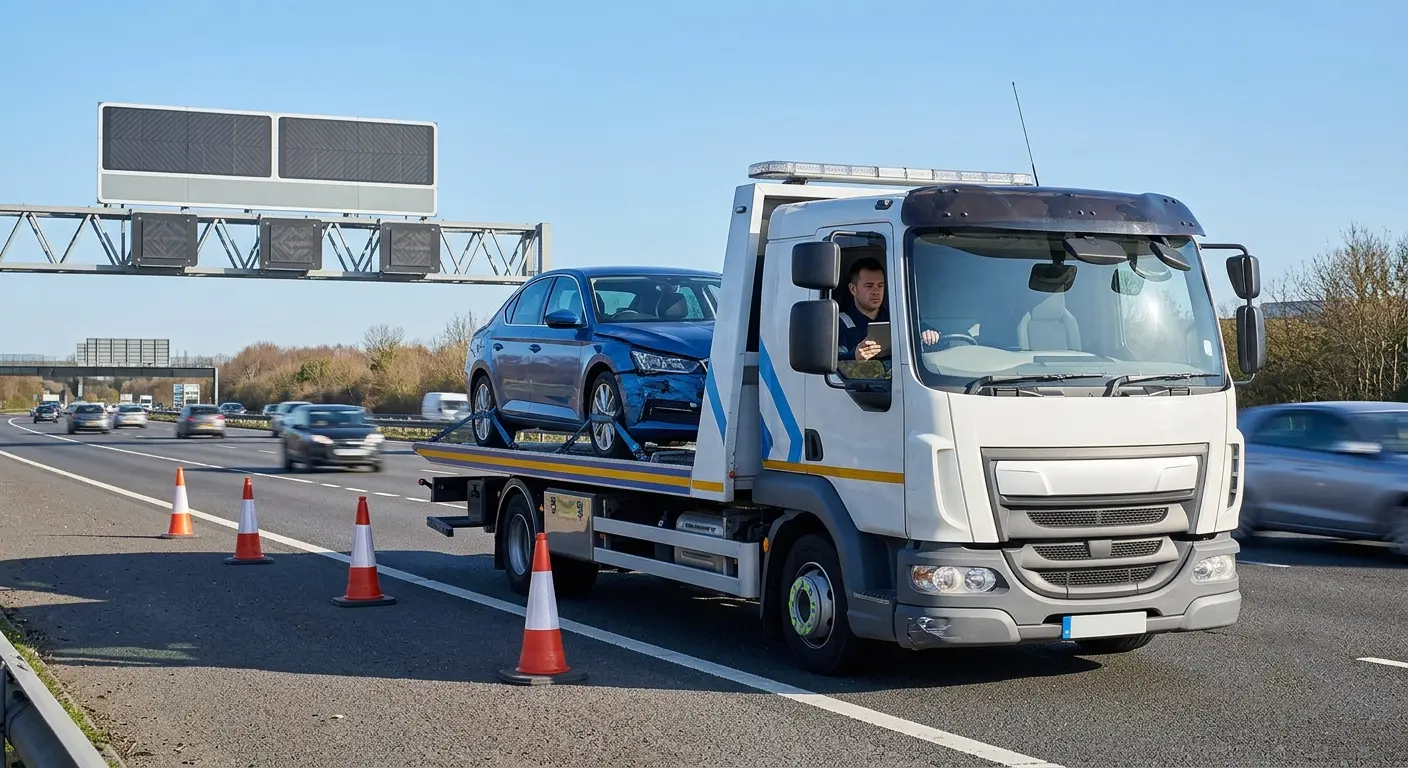
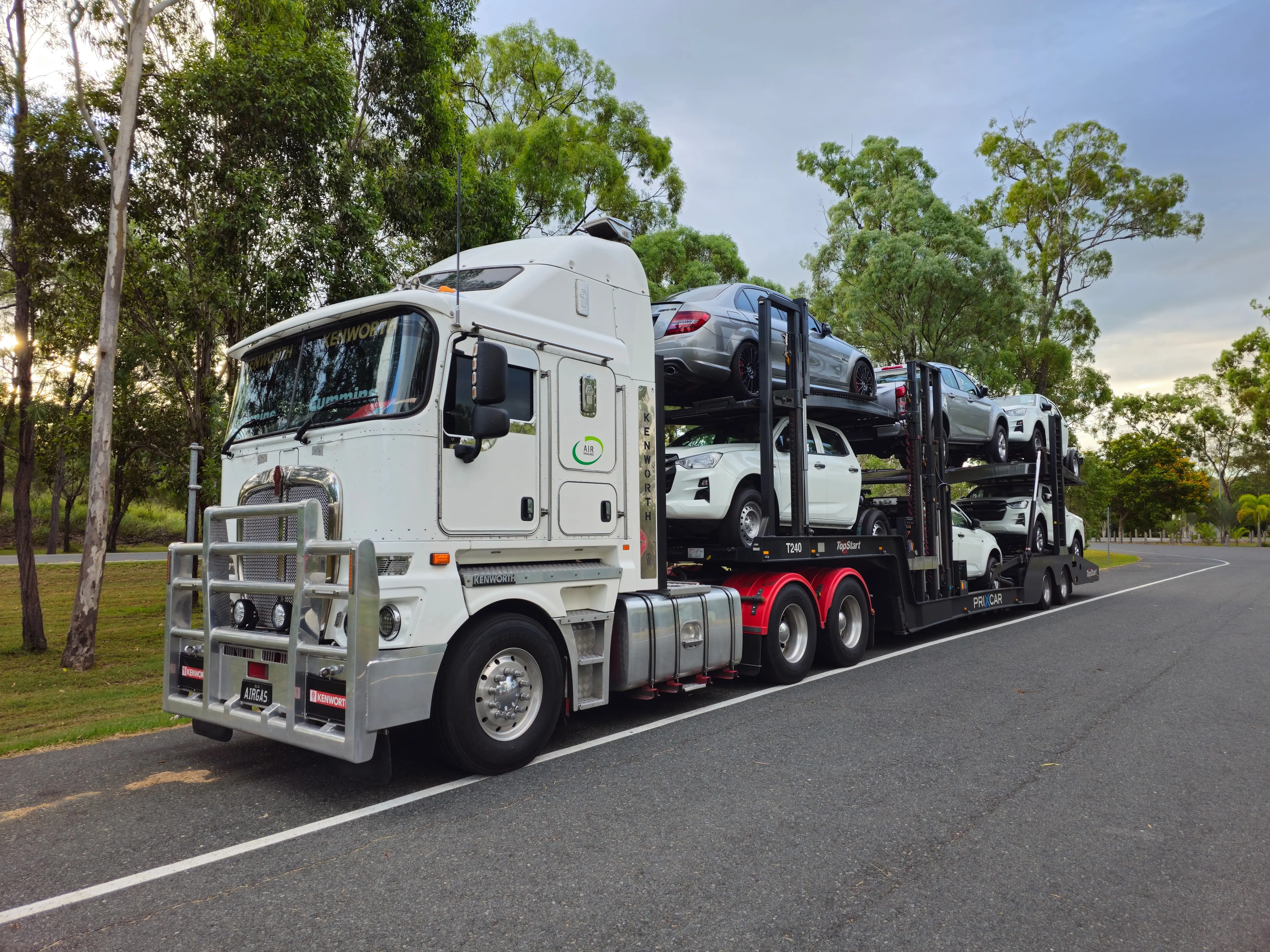
A car stopped on the hard shoulder is uncomfortable and, more to the point, unsafe. In Badajoz we take breakdown calls at any hour of the day or night, with flatbed vehicles that move the car without putting any further strain on it and without adding kilometres to an engine that is already in trouble.
Badajoz's proximity to the border means a share of moves are international, and there documentation matters as much as logistics. Permits, insurance valid in the destination country and correct vehicle details are what prevent a long hold at the crossing.
What makes Badajoz different
The A-5 gives a direct long-distance link to Madrid. The province is large and thinly populated, so internal runs are long.
Badajoz is the main crossing into Portugal in the centre-west, with steady traffic towards Lisbon. For general background on the area, the Badajoz entry on Wikipedia covers the basics.
How your vehicle is covered while it is being moved
A properly run move records the vehicle's condition before loading, normally photographically, and records it again at delivery. That evidence is what settles any later disagreement quickly.
It is worth confirming the company holds the relevant transport authorisation with the Spanish Ministry of Transport and a current policy. That is the difference between a professional service and someone with a hired trailer.
What the law says about moving a vehicle that cannot be driven
Driving without a current ITV carries a fine and can result in the vehicle being immobilised under the rules the Dirección General de Tráfico (DGT) enforces. There is a larger problem behind it: in the event of an accident, your insurer may reduce or refuse cover entirely.
Royal Decree 920/2017 governing the ITV roadworthiness test allows a limited exception for travelling to a booked inspection, but it does not permit normal use of the vehicle. Any other journey requires it to be carried on a transporter.
The border crossing near Badajoz can build up queues at certain times of year, which is worth factoring into any deadline.
Common breakdowns that end in recovery
Starting faults account for a large share of call-outs, and it is not always the battery — the starter motor, the alternator or an immobiliser fault produce similar symptoms. Telling them apart on site avoids recovering a car that a jump lead would have solved.
Some symptoms mean stop and do not restart: temperature in the red, oil pressure warning lit, a burning smell, or a new metallic noise. Pressing on in those cases turns a moderate repair into a major one.
Should I call my insurer or arrange it myself?
It is worth reading what your assistance actually covers before you need it. Many policies tow only to the nearest approved garage, which can leave the vehicle a hundred kilometres from where you want it.
There is one situation where policy assistance does not apply at all: a vehicle without a valid ITV or without insurance. Transport then has to be arranged separately, and it helps to know that before you are stranded.
What changes when the car is electric
The share of electric and hybrid vehicles on the road grows every year, and call-outs involving them grow with it. The main practical difference is that these vehicles must always travel on a flatbed, without exception, and that securing points must respect the location of the battery pack.
The destination changes too. A broken-down EV cannot go to just any garage — it needs an authorised workshop with high-voltage trained technicians, and that is worth confirming before agreeing a delivery point.
Why a flatbed beats a tow
Flatbed transport also protects the underside of the vehicle, which matters on low cars and anything with sports bodywork. Shallow-angle ramps and, where needed, skates prevent the front splitter grounding during loading.
For electric and hybrid vehicles the flatbed is simply the only sensible option. Towing an EV with its driven wheels turning spins the motor as a generator and can damage the high-voltage system.
Breakdowns outside office hours
Breakdowns do not respect office hours, and a substantial share of call-outs come at night, at weekends or on public holidays. A service that only operates nine to five leaves the driver waiting at the worst possible moment.
Operating around the clock is more than leaving a phone switched on — it means having vehicles and crew ready to go at any hour. The difference shows in actual arrival time, not in the answerphone message.
What determines arrival time
The most useful thing a caller can do to shorten the wait is give a precise location: kilometre marker and direction of travel on a road, or exact address and landmarks in a town. Phone location sharing helps a great deal.
Mentioning the vehicle type and whether it rolls matters too. Sending the right truck first time avoids the worst outcome, which is a second trip with the correct equipment.
Other services in Badajoz
You can read more about breakdown recovery or browse all our services. For a specific quote in Badajoz, the quickest route is to get in touch.
Practical advice for your move
In low-emission zones, verify whether the transport truck can enter during the planned time window. Many restrictions apply to heavy vehicles even where the car being carried would itself be allowed through.
Photograph the vehicle before loading, including all four corners, the roof and underneath if you can. It takes two minutes and settles any later disagreement about a scratch.
On vehicles with large-diameter wheels and low-profile tyres, the approach to the ramps needs more care. It is worth mentioning so the right angle is prepared and the tyre or rim is not scuffed.
Have the vehicle and ownership documents ready. On moves ending at a port terminal or crossing a border, that paperwork matters as much as the vehicle itself.
Where a tailgate or bonnet no longer closes properly after an impact, secure it before loading. A tailgate that springs open at eighty kilometres an hour is a genuine hazard to other traffic.
Bear in mind that in peak periods — summer, or the start and end of the season — lead times stretch. Booking ahead is the simple way around it.
If the vehicle contains fuel cans or any flammable material, remove it beforehand. Dangerous goods transport is governed by its own regulations and cannot travel mixed in with the vehicle.
If you are selling the vehicle and the buyer arranges transport, put in writing when responsibility passes. It is normally at key handover, but both parties benefit from having it stated.
Realistic timescales depend on distance and route, not optimism. A company that promises any deadline without asking where the vehicle is probably will not meet it.
Agree who signs for the vehicle at the destination. If it arrives at a closed workshop or an address where nobody is present, the driver cannot simply leave it, and waiting time or a second attempt both cost money.
Check whether your own policy covers the vehicle while it sits at a third-party workshop or compound. It is a frequent gap between the end of transport and the start of repair, and worth clarifying.
If the vehicle will sit on a public street waiting for collection, check there are no timed restrictions or scheduled clearing on that road. A car towed by the local authority while waiting for transport complicates matters considerably and adds costs nobody planned for.
An accessible collection point saves both time and money. If the street is narrow or the garage has restricted headroom, agreeing a nearby spot where the truck can manoeuvre simplifies everything.
Open transporters are the standard option and perfectly safe for most vehicles. Enclosed transport makes sense for classics, high-value cars and anything with very low ground clearance.
Know where the spare wheel and tools are if the vehicle carries them. On long moves, a loose item in the boot shifts during the journey and can damage the interior or the trim.
If you need the vehicle by a fixed, immovable date, say so when booking rather than afterwards. With enough notice it can almost always be accommodated; with twenty-four hours, often not.
Before the truck arrives, take the documentation, spare keys and anything valuable out of the vehicle. It travels unaccompanied, and items left inside are not covered as luggage.
Flag it if the vehicle has stood unused for a long period. Flat tyres, seized brakes or a completely dead battery all change how it has to be loaded.
A vehicle leaking oil or fuel should be flagged before transport. It does not prevent the move, but it affects where the car sits on the deck and what protection goes underneath it.
If the vehicle has been in an accident, say what is damaged and whether the wheels still turn. A vehicle that will not roll needs a winch and sometimes dollies.
If the vehicle is on rural land or at the end of an unsurfaced track, state the distance from the tarmac road. An articulated truck cannot enter every lane, and sometimes the car has to be brought out to a meeting point.
Make sure the alarm is disabled, or that the driver knows how to disable it. An alarm going off in transit means stopping and complicates the job for no reason.
Check the handbrake works and that the vehicle can be secured on the deck. If it cannot, there are solutions, but it is better known in advance.
If the move is a private sale, coordinate payment and key handover clearly. The carrier moves the vehicle; it takes no part in the transaction.
Moving several vehicles together usually works out considerably cheaper per unit than separate jobs. If you have more than one to move, it is worth quoting them as one.
Get the name and number of the driver handling the job, or at least a direct operational contact. On the day, being able to resolve a question in two minutes prevents an hour of waiting.
If you will not be present at collection or delivery, put in writing who hands over and who receives the keys, with a phone number. This is the single most common cause of avoidable delay.
Ask whether the price includes waiting time at loading and unloading. On moves to workshops, dealerships or compounds with slow procedures, that time can stretch, and it is worth knowing in advance how it is counted.
In summary
Car Transport 247 works across Badajoz and the whole of Spain, 24 hours a day, with goods-in-transit cover for the journey and the price fixed before we start. Tell us your situation and we will give you an honest answer on how it works and what it costs.
Broken down in Badajoz? Call us
One number, any hour. We tell you how long we will be and what it costs before we set off.