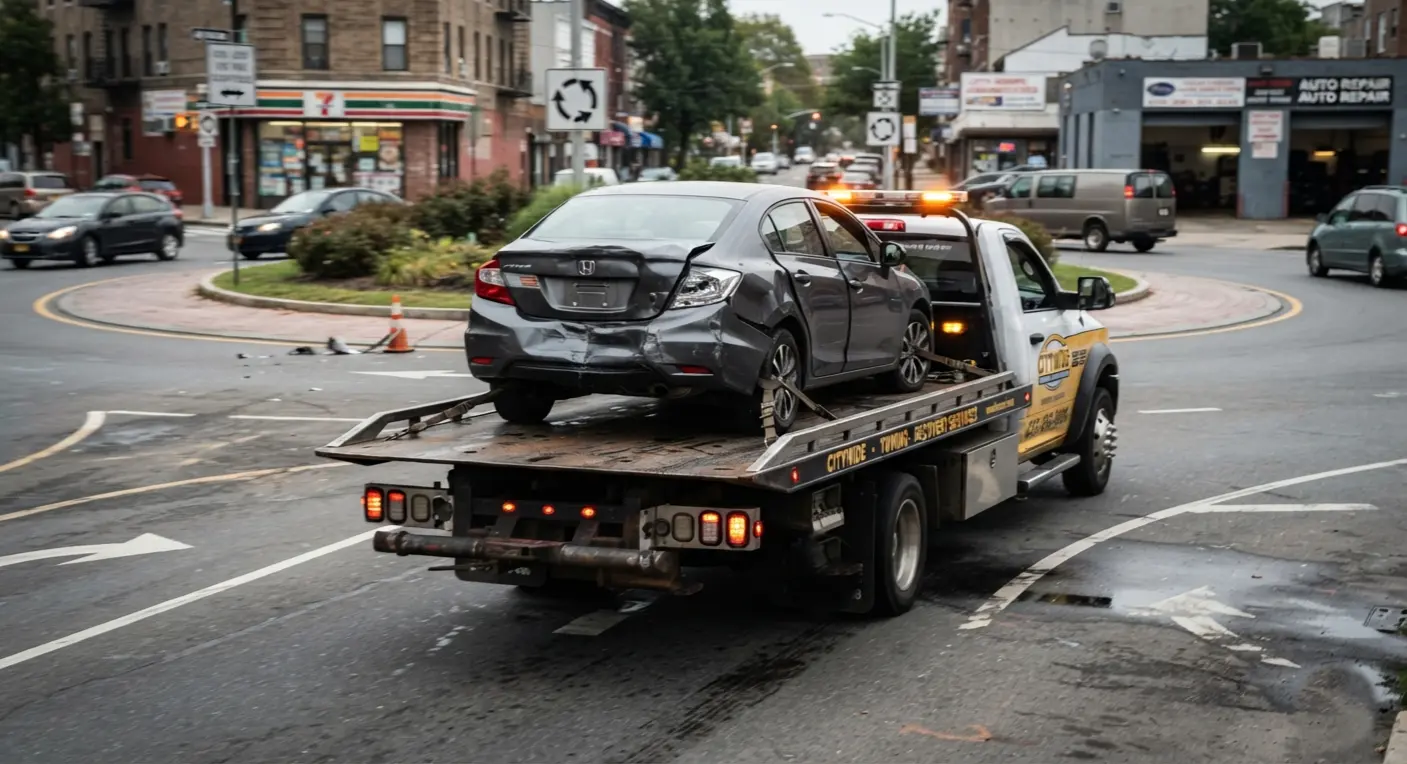
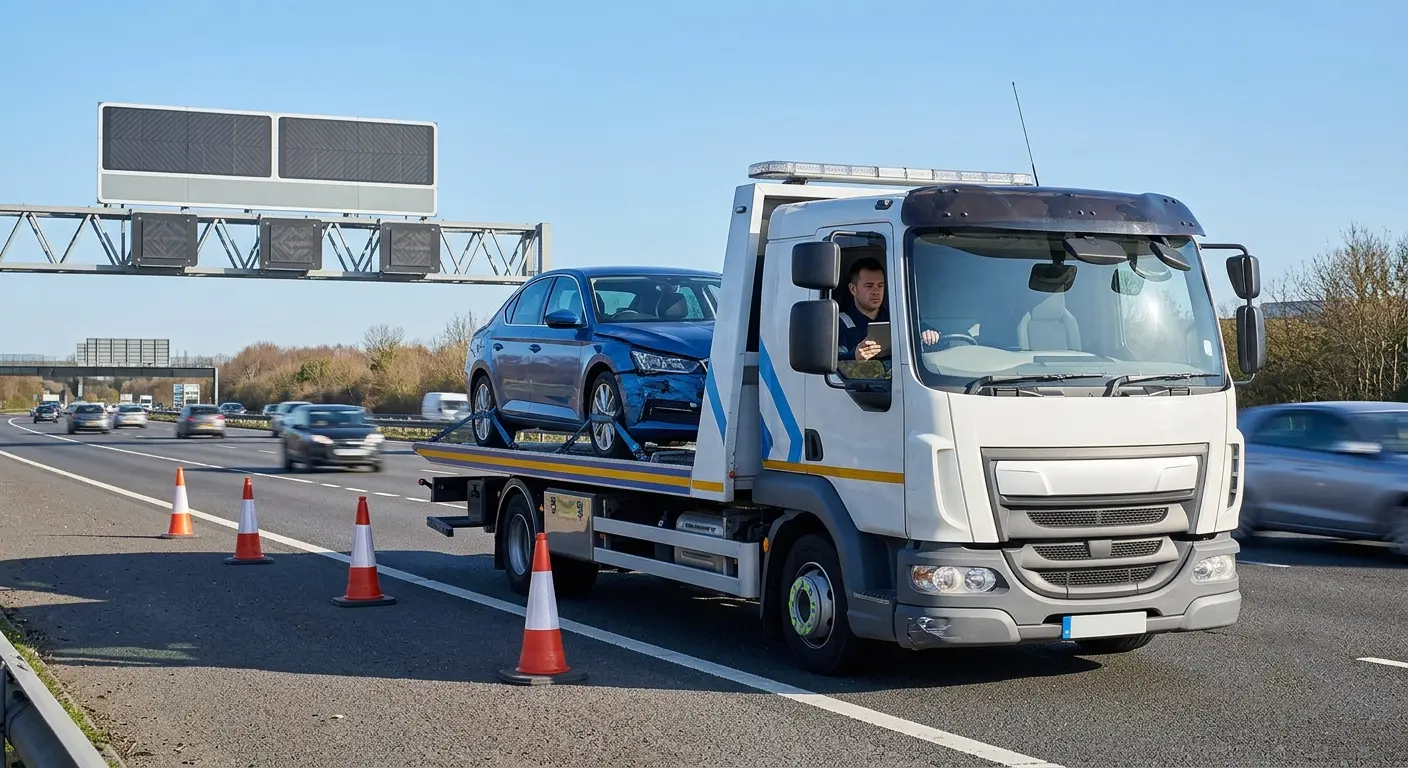
A car that will not start is not always broken — sometimes it has simply stood too long. Either way, the only way to move it is to load it. We transport non-running vehicles across San Sebastián, including those that will not roll, those with seized brakes, and those that have sat in a garage for years.
A cross-border move from San Sebastián is not something to improvise. Regulatory differences between countries affect what can be transported and under what conditions, particularly where the vehicle cannot be driven.
San Sebastián: how the area shapes the job
It helps to set the context before going into detail. Being close to Irún and the French border makes cross-border vehicle moves routine here. San Sebastián's terrain and street layout restrict access for long vehicles in several areas.
The AP-8 and A-1 are the main routes out towards Bilbao and the plateau. There is more background on the city in its Wikipedia entry.
The legal position: when transport stops being optional
A vehicle without a valid ITV, without insurance, or on temporary deregistration cannot legally be driven on public roads. The Dirección General de Tráfico (DGT) is unambiguous here, and the penalty falls on the registered keeper. Moving it by truck is not a matter of preference — it is the only lawful option.
Royal Decree 920/2017 governing the ITV roadworthiness test sets out the narrow circumstances in which a vehicle may travel to a test station, and outside that specific case driving it is prohibited. That distinction is worth understanding before assuming you can drive to the garage.
When a vehicle becomes a non-runner
A vehicle is described as a non-runner when it cannot move by itself, whatever the cause — mechanical, electrical, or simply the result of long immobility.
It is worth being precise about the condition when requesting a quote, because a car that rolls and can be pushed is not the same as one with locked wheels. That difference determines the equipment needed and therefore the price.
Preparing a stationary vehicle for transport
Four things are worth doing beforehand: check the handbrake is not seized, clear access around the vehicle, find the keys even if it will not start, and take belongings out of the interior.
Keys matter even on a car that will not start, because they release the steering lock and allow an automatic gearbox to come out of park. Without them, loading becomes considerably harder.
Collections from garages and enclosed spaces
Difficult collections are usually difficult because of access, not the vehicle. Warehouses with narrow doors, interior courtyards, rural properties down dirt tracks and communal garages with steep ramps are the recurring cases.
In all of them the answer is the same: know in advance. With the right information the correct equipment is sent and, if necessary, the vehicle is brought out to a nearby accessible point first.
On international moves from San Sebastián, insurance validity in the destination country is the point most worth verifying before loading.
The cost of moving a vehicle that does not run
A realistic quote for a stationary vehicle needs three things: origin and destination, rolling condition, and access. With those, a fixed price can be given that will not change afterwards.
On long-distance moves the cost per kilometre falls noticeably. Moving a vehicle from one end of the country to the other does not cost proportionally the same as a short urban job.
Moving a car that has not run in years
Cars stored for years in garages, on land or in outbuildings usually have the parking brake seized by corrosion. It is the most common complication and the one that most often forces improvisation when it has not been mentioned.
It is also common for the vehicle to be surrounded by stored items or wedged into a space it has not left in a long time. Clearing access before the appointment saves a significant part of the job time.
Private sales and auction purchases
Auction purchases of damaged or seized vehicles usually come with a collection deadline, after which storage charges accrue. Arranging transport in advance avoids that cost.
In a private sale it is worth having the change of ownership and insurance resolved before or immediately after the move. The carrier moves the vehicle but plays no part in those formalities.
Cover and liability during transport
Before handing keys to anyone, ask one specific question: is the vehicle covered while it sits on the transporter, for how much, and against what. An operator working legally and registered with the Spanish Ministry of Transport can evidence that without difficulty.
The carrier's cover is not the same as your own motor policy. Your insurance covers driving; during transport it is the carrier's goods-in-transit policy that responds. Confusing the two is behind most of the disputes that arise.
Other services in San Sebastián
More on non-runner transport and on the rest of our services. If you would rather we called you, leave your details on the contact page and we will assess your case in San Sebastián.
Things to check before booking
In low-emission zones, verify whether the transport truck can enter during the planned time window. Many restrictions apply to heavy vehicles even where the car being carried would itself be allowed through.
Make sure the alarm is disabled, or that the driver knows how to disable it. An alarm going off in transit means stopping and complicates the job for no reason.
Before confirming, check the quote is fixed rather than an estimate subject to surcharges. Extras for difficult access or a non-rolling vehicle should be clear from the outset.
If the vehicle is on rural land or at the end of an unsurfaced track, state the distance from the tarmac road. An articulated truck cannot enter every lane, and sometimes the car has to be brought out to a meeting point.
If the vehicle has been in an accident, say what is damaged and whether the wheels still turn. A vehicle that will not roll needs a winch and sometimes dollies.
If the collection is from a building with a communal garage, tell the manager or concierge. A transporter manoeuvring on a shared ramp without warning creates avoidable friction with neighbours.
If the vehicle will sit on a public street waiting for collection, check there are no timed restrictions or scheduled clearing on that road. A car towed by the local authority while waiting for transport complicates matters considerably and adds costs nobody planned for.
Be wary of quotes well below market rate. In vehicle transport, a low price usually means no goods-in-transit insurance, no operating authorisation, or neither.
If the vehicle is in an underground car park, check the clearance height first. Many garages cannot take a transporter and the car has to be brought up to street level.
Open transporters are the standard option and perfectly safe for most vehicles. Enclosed transport makes sense for classics, high-value cars and anything with very low ground clearance.
If the move is a private sale, coordinate payment and key handover clearly. The carrier moves the vehicle; it takes no part in the transaction.
On keyless-start vehicles, remember the fob must travel with you or be handed over at the destination, but never left inside the car in transit. It is a more common oversight than you would think and leaves the vehicle locked on arrival.
Bear in mind that in peak periods — summer, or the start and end of the season — lead times stretch. Booking ahead is the simple way around it.
Check the overall height if the vehicle is a van, a camper or a 4x4 with roof accessories. The vehicle's height plus the deck height determines what the loaded truck can pass under.
Photograph the vehicle before loading, including all four corners, the roof and underneath if you can. It takes two minutes and settles any later disagreement about a scratch.
Know where the spare wheel and tools are if the vehicle carries them. On long moves, a loose item in the boot shifts during the journey and can damage the interior or the trim.
Ask whether the price includes waiting time at loading and unloading. On moves to workshops, dealerships or compounds with slow procedures, that time can stretch, and it is worth knowing in advance how it is counted.
Keep the job reference or delivery note. If you later need to evidence the move to an insurer, a workshop or the authorities, that document proves when and how the vehicle was moved.
Before collection, check no personal documents are left in the glovebox. It is where forgotten paperwork most often turns up, and some of it contains details you would not want travelling unsupervised.
Check whether your own policy covers the vehicle while it sits at a third-party workshop or compound. It is a frequent gap between the end of transport and the start of repair, and worth clarifying.
Where a tailgate or bonnet no longer closes properly after an impact, secure it before loading. A tailgate that springs open at eighty kilometres an hour is a genuine hazard to other traffic.
On vehicles with large-diameter wheels and low-profile tyres, the approach to the ramps needs more care. It is worth mentioning so the right angle is prepared and the tyre or rim is not scuffed.
If you will not be present at collection or delivery, put in writing who hands over and who receives the keys, with a phone number. This is the single most common cause of avoidable delay.
Get the name and number of the driver handling the job, or at least a direct operational contact. On the day, being able to resolve a question in two minutes prevents an hour of waiting.
If the vehicle has any quirk — lowered suspension, an automatic gearbox locked in park, a flat battery — mention it when requesting the quote so the right equipment turns up.
Agree who signs for the vehicle at the destination. If it arrives at a closed workshop or an address where nobody is present, the driver cannot simply leave it, and waiting time or a second attempt both cost money.
Realistic timescales depend on distance and route, not optimism. A company that promises any deadline without asking where the vehicle is probably will not meet it.
In summary
In short: in San Sebastián what makes the difference is a realistic timescale, a fixed price with no extras, and a move documented from start to finish. That is exactly what we provide, at any hour.
Got a car that will not start in San Sebastián?
We load non-rolling vehicles with winch and skates. Describe the situation and we will sort it.