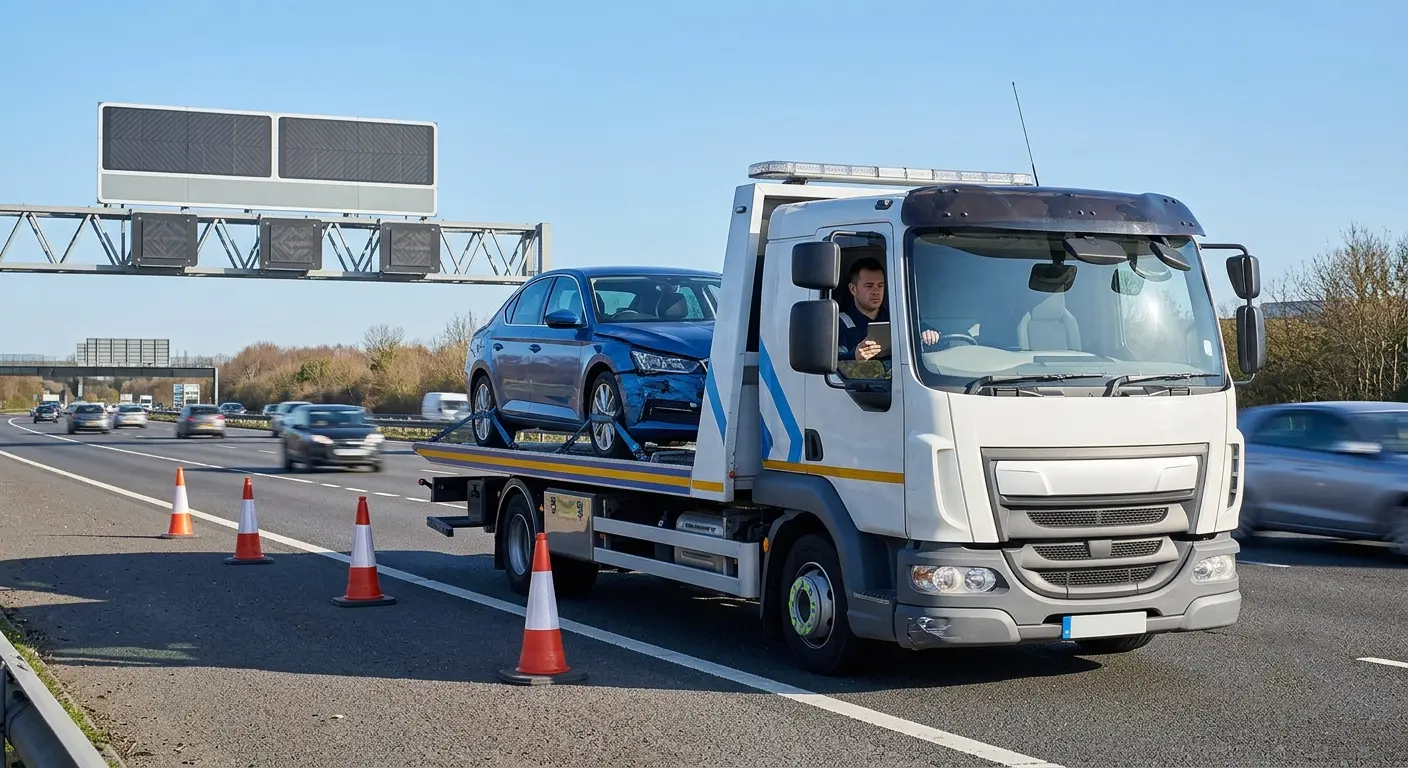
We work in Cartagena on a simple principle: arrive when we say we will, and take the vehicle to the garage you choose. No imposed destinations and no extras appearing at the end. Flatbed recovery, goods-in-transit cover for the journey, and a fixed price from the first call.
In Cartagena the port sets the rhythm. Ro-ro traffic and vehicle terminals run to time windows, and matching collection or delivery to those windows is half the job. The other half is remembering that port access needs prior accreditation.
Cartagena: how the area shapes the job
The AP-7 and A-30 connect it to Murcia and the wider Mediterranean corridor. Its compact historic centre contrasts sharply with the open industrial zones around the port.
Cartagena combines a commercial port, a naval base and a major petrochemical cluster in the Escombreras valley. For general background on the area, the Cartagena entry on Wikipedia covers the basics.
When it pays not to use your policy cover
It is worth reading what your assistance actually covers before you need it. Many policies tow only to the nearest approved garage, which can leave the vehicle a hundred kilometres from where you want it.
There is one situation where policy assistance does not apply at all: a vehicle without a valid ITV or without insurance. Transport then has to be arranged separately, and it helps to know that before you are stranded.
Cover and liability during transport
A properly run move records the vehicle's condition before loading, normally photographically, and records it again at delivery. That evidence is what settles any later disagreement quickly.
It is worth confirming the company holds the relevant transport authorisation with the Spanish Ministry of Transport and a current policy. That is the difference between a professional service and someone with a hired trailer.
Signs to switch off and leave it
The urge to make it to the garage under your own power is understandable but usually expensive. With oil pressure compromised, an engine can destroy itself within minutes of running, and no warranty covers that.
The same applies to transmissions. An automatic gearbox that has lost fluid or is making unusual noises should not turn a wheel. On four-wheel-drive vehicles, towing with wheels on the road can damage the drivetrain outright, making flatbed transport the only safe option.
What the law says about moving a vehicle that cannot be driven
A vehicle without a valid ITV, without insurance, or on temporary deregistration cannot legally be driven on public roads. The Dirección General de Tráfico (DGT) is unambiguous here, and the penalty falls on the registered keeper. Moving it by truck is not a matter of preference — it is the only lawful option.
Royal Decree 920/2017 governing the ITV roadworthiness test sets out the narrow circumstances in which a vehicle may travel to a test station, and outside that specific case driving it is prohibited. That distinction is worth understanding before assuming you can drive to the garage.
Port activity in Cartagena also means work happens outside standard office hours. A service that only operates nine to five fits badly with terminal reality.
Common breakdowns that end in recovery
By frequency, batteries strand more cars than anything else, followed by starting faults, engine overheating, punctures with no usable spare, and clutch or transmission failures. Modern electronics add a growing category of sensor faults that drop the car into limp mode.
Some of these can be fixed on the spot and some cannot. A flat battery can be jump-started; an engine that has lost coolant and overheated must not be restarted under any circumstances, because every further minute of running deepens damage that may already be irreversible.
Why the hour matters when you break down
Breakdowns do not respect office hours, and a substantial share of call-outs come at night, at weekends or on public holidays. A service that only operates nine to five leaves the driver waiting at the worst possible moment.
Operating around the clock is more than leaving a phone switched on — it means having vehicles and crew ready to go at any hour. The difference shows in actual arrival time, not in the answerphone message.
What determines the price of a recovery
Price depends on the distance between collection and destination, the vehicle type, how difficult the access is, and the time of day. A night or public holiday call-out costs more, for obvious reasons of availability.
What should not happen is unannounced extras appearing at the end. Charges for awkward access, for a non-rolling vehicle, or for out-of-hours work belong in the original quote.
Why a flatbed beats a tow
A flatbed carries the whole vehicle on the deck with all four wheels off the ground. That removes tyre wear, spares the transmission a rotation it was never designed for while stationary, and avoids damage to whichever axle would otherwise be rolling.
On vehicles with automatic gearboxes, four-wheel drive or electronic traction systems, a flatbed is not a preference but a manufacturer requirement. Towing with driven wheels in contact with the road can cause serious drivetrain damage.
Other services in Cartagena
More on breakdown recovery and on the rest of our services. If you would rather we called you, leave your details on the contact page and we will assess your case in Cartagena.
Details worth keeping in mind
Know where the spare wheel and tools are if the vehicle carries them. On long moves, a loose item in the boot shifts during the journey and can damage the interior or the trim.
If the vehicle has any quirk — lowered suspension, an automatic gearbox locked in park, a flat battery — mention it when requesting the quote so the right equipment turns up.
Battery condition matters even for a transport job. If the vehicle has to move a few metres under its own power to get out of a garage or a parking bay, a live battery saves time and avoids resorting to auxiliary equipment.
If the vehicle will sit on a public street waiting for collection, check there are no timed restrictions or scheduled clearing on that road. A car towed by the local authority while waiting for transport complicates matters considerably and adds costs nobody planned for.
Check the overall height if the vehicle is a van, a camper or a 4x4 with roof accessories. The vehicle's height plus the deck height determines what the loaded truck can pass under.
If you will not be present at collection or delivery, put in writing who hands over and who receives the keys, with a phone number. This is the single most common cause of avoidable delay.
If the collection is from a building with a communal garage, tell the manager or concierge. A transporter manoeuvring on a shared ramp without warning creates avoidable friction with neighbours.
On moves crossing several autonomous communities, bear in mind that heavy vehicle driving restrictions vary at weekends and on public holidays. That can affect the specific delivery day.
Keep the job documentation recording the vehicle's condition. It is the reference point if a question about damage and its timing comes up later.
On vehicles with large-diameter wheels and low-profile tyres, the approach to the ramps needs more care. It is worth mentioning so the right angle is prepared and the tyre or rim is not scuffed.
Be wary of quotes well below market rate. In vehicle transport, a low price usually means no goods-in-transit insurance, no operating authorisation, or neither.
An accessible collection point saves both time and money. If the street is narrow or the garage has restricted headroom, agreeing a nearby spot where the truck can manoeuvre simplifies everything.
On keyless-start vehicles, remember the fob must travel with you or be handed over at the destination, but never left inside the car in transit. It is a more common oversight than you would think and leaves the vehicle locked on arrival.
Leave the fuel tank low, around a quarter. It reduces weight, follows standard transport practice, and there is nothing to gain from a full tank during the journey.
Check the handbrake works and that the vehicle can be secured on the deck. If it cannot, there are solutions, but it is better known in advance.
Have the vehicle and ownership documents ready. On moves ending at a port terminal or crossing a border, that paperwork matters as much as the vehicle itself.
Bear in mind that in peak periods — summer, or the start and end of the season — lead times stretch. Booking ahead is the simple way around it.
For vehicles with bulky modifications or accessories — roof racks, bike carriers, bull bars — mention them. They can affect the overall height of the loaded truck and whether it clears certain access points.
Check whether your own policy covers the vehicle while it sits at a third-party workshop or compound. It is a frequent gap between the end of transport and the start of repair, and worth clarifying.
If you are selling the vehicle and the buyer arranges transport, put in writing when responsibility passes. It is normally at key handover, but both parties benefit from having it stated.
Before collection, check no personal documents are left in the glovebox. It is where forgotten paperwork most often turns up, and some of it contains details you would not want travelling unsupervised.
If the move includes a sea crossing, check what documentation the ferry operator requires for the vehicle. The registration document and owner details are usually needed, and a missing paper means missing the sailing.
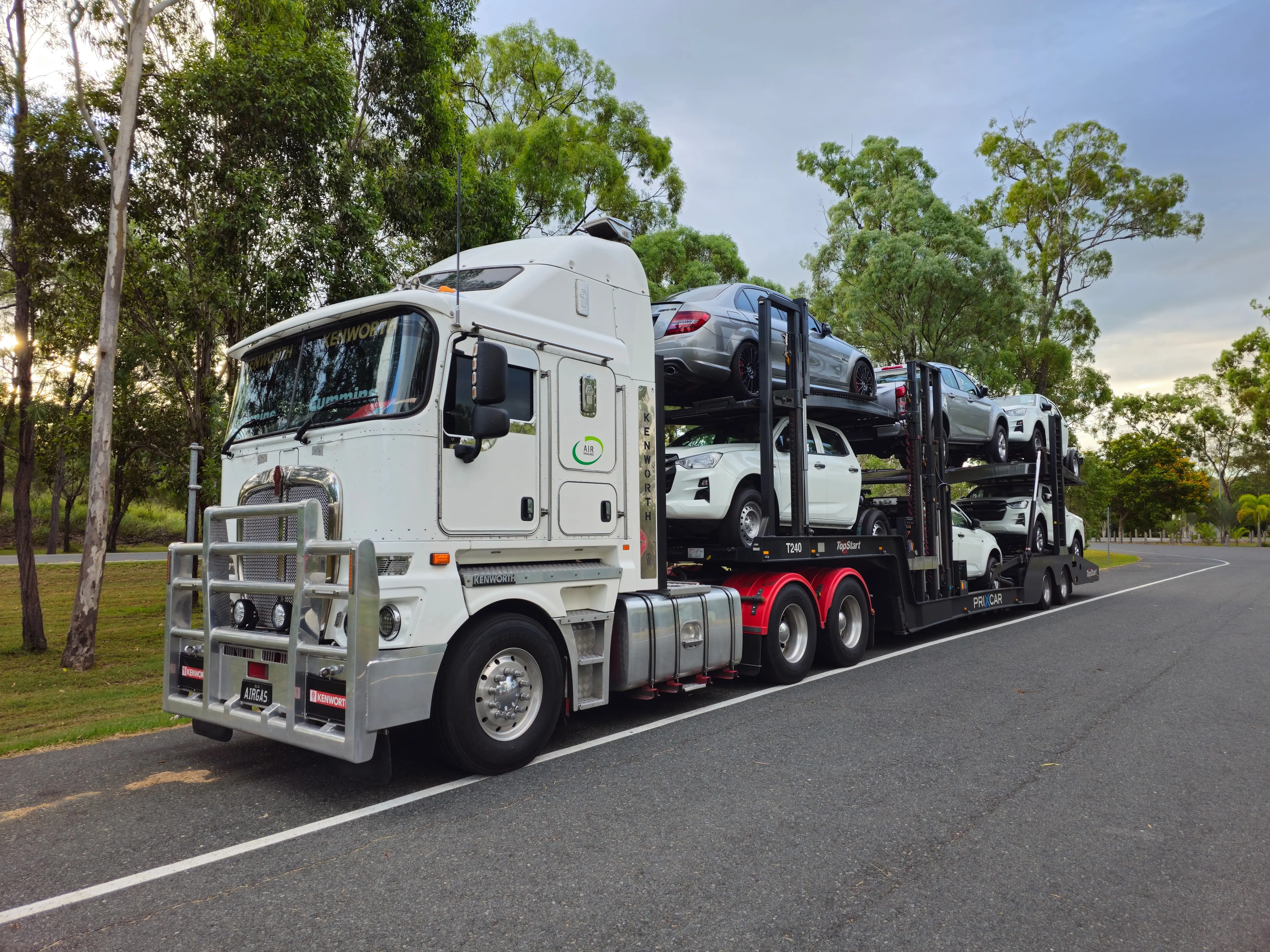
Moving several vehicles together usually works out considerably cheaper per unit than separate jobs. If you have more than one to move, it is worth quoting them as one.
On long moves, asking how many loading and unloading points the truck has helps explain the timescale. A truck making several stops takes longer than a direct run.
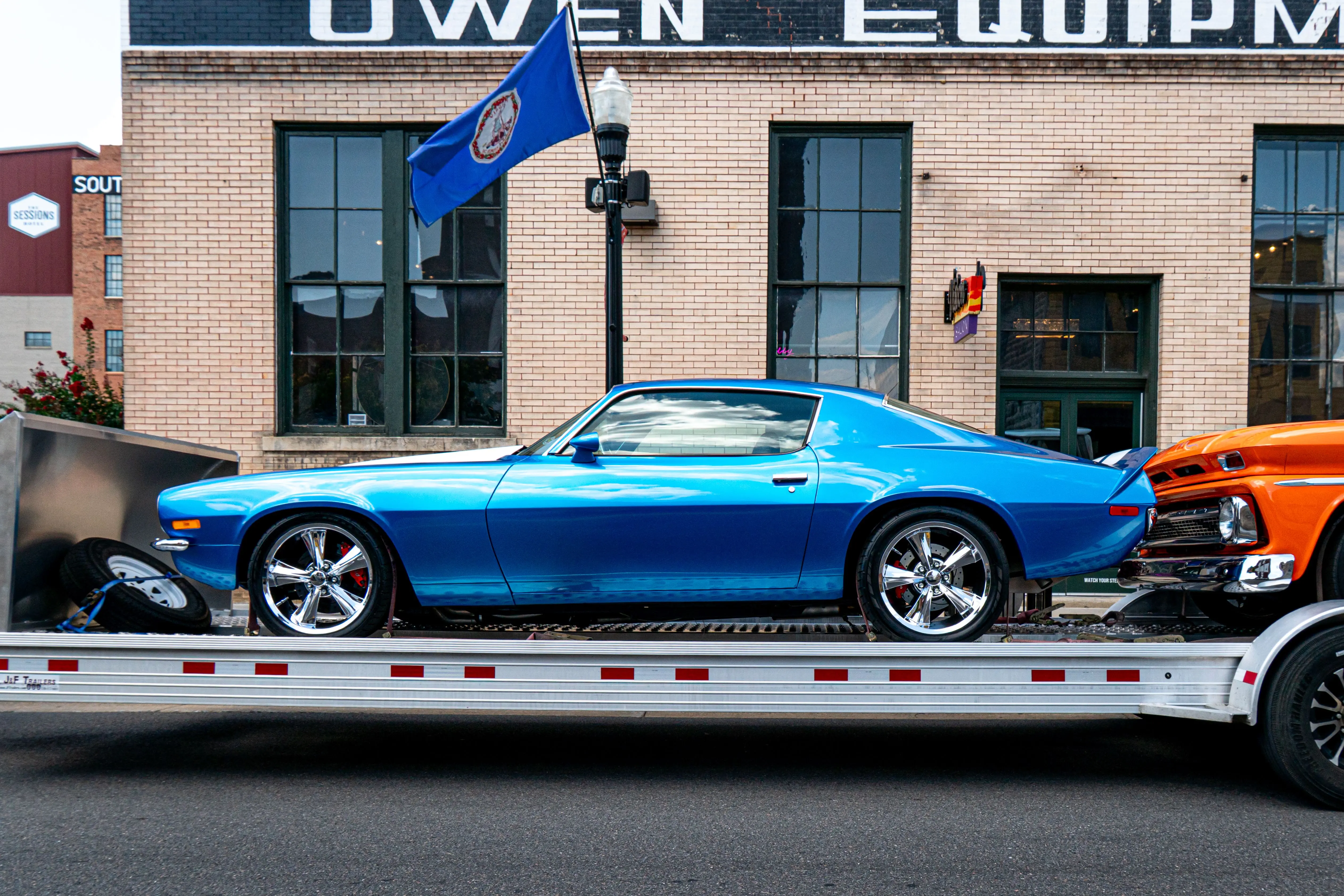
Open transporters are the standard option and perfectly safe for most vehicles. Enclosed transport makes sense for classics, high-value cars and anything with very low ground clearance.
If the vehicle contains fuel cans or any flammable material, remove it beforehand. Dangerous goods transport is governed by its own regulations and cannot travel mixed in with the vehicle.
If the vehicle is in an underground car park, check the clearance height first. Many garages cannot take a transporter and the car has to be brought up to street level.
In summary
In short: in Cartagena what makes the difference is a realistic timescale, a fixed price with no extras, and a move documented from start to finish. That is exactly what we provide, at any hour.
Immediate assistance in Cartagena
One number, any hour. We tell you how long we will be and what it costs before we set off.