After an accident the car is the last thing on your mind, and rightly so. When the moment comes to move it, what matters is doing so without worsening the damage and recording the condition it was in. We recover accident-damaged vehicles in A Coruña at any hour, with the equipment needed to load a car that will not roll.
Port activity in A Coruña means a constant flow of vehicles entering and leaving the country. Plenty of moves therefore carry import or export documentation, and a paperwork error can immobilise a vehicle for longer than any mechanical fault.
A Coruña: how the area shapes the job
A Coruña is a regular destination for our work, and it comes with conditions of its own. The outer harbour at Punta Langosteira has significantly expanded the city's logistics capacity. Sitting in the far north-west means long distances to central Spain, with the A-6 as the main artery.
The old town and Marina district have narrow streets that limit access for larger recovery vehicles.
Damage you cannot see from outside
A vehicle that has taken an impact can look driveable without being so. Steering geometry may have shifted, the brake circuit may be compromised, the chassis may have deformed invisibly, and safety systems may have been rendered inoperative.
There is a legal dimension too: driving a vehicle whose safety equipment does not function is an offence, and in the event of a second incident the driver's position with their insurer becomes very weak indeed.
What to do at the scene of an accident
After a collision the car is last on the list. First the safety of the occupants and of other traffic, then the emergency call, and only then an assessment of the damage.
One detail that is often forgotten: photograph the scene before the vehicles are moved. Once they have been shifted, reconstructing their relative positions is much harder and can complicate the question of liability.
In A Coruña it is worth distinguishing a door-to-door move from one ending inside the port area: access requirements and waiting times are nothing alike.
Accidents involving several vehicles
In a multi-vehicle accident, clearance has to be sequenced: first whatever is obstructing traffic, then the rest. Coordinating several units keeps the road closed for less time than it otherwise would be.
Where the vehicles have different owners, each may have a different destination. Establishing which vehicle goes where at the outset prevents confusion on site.
How your vehicle is covered while it is being moved
Before handing keys to anyone, ask one specific question: is the vehicle covered while it sits on the transporter, for how much, and against what. An operator working legally and registered with the Spanish Ministry of Transport can evidence that without difficulty.
The carrier's cover is not the same as your own motor policy. Your insurance covers driving; during transport it is the carrier's goods-in-transit policy that responds. Confusing the two is behind most of the disputes that arise.
Winches, skates and safe loading
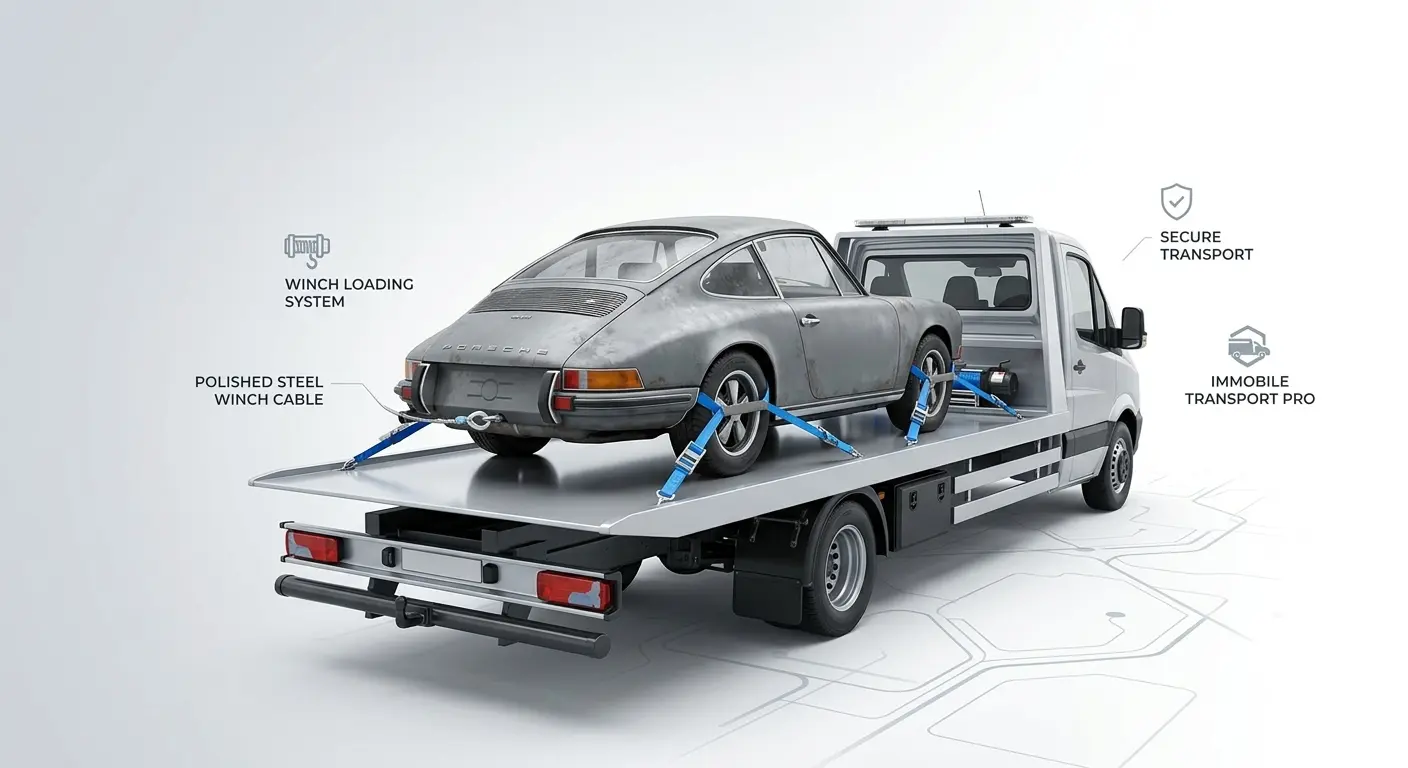
A crashed vehicle presents a practical problem: it may not roll, the steering may not turn, and it may be sitting somewhere awkward — off the carriageway or against a barrier. Each situation calls for a different technique and the right equipment.
Before loading, anything liable to detach in transit is removed, such as a hanging bumper or broken glass. That is part of the job and stops the recovery itself creating a hazard for other traffic.
Transport and the insurance claim
After a claim is opened, the vehicle usually goes to an approved garage or a compound pending assessment. What matters is that its condition at collection and at delivery is recorded.
If the vehicle is going to be written off, the destination changes — normally to an authorised treatment facility. Confirming that before the move avoids paying for two jobs.
Regulations that apply to moving a vehicle
Driving without a current ITV carries a fine and can result in the vehicle being immobilised under the rules the Dirección General de Tráfico (DGT) enforces. There is a larger problem behind it: in the event of an accident, your insurer may reduce or refuse cover entirely.
Royal Decree 920/2017 governing the ITV roadworthiness test allows a limited exception for travelling to a booked inspection, but it does not permit normal use of the vehicle. Any other journey requires it to be carried on a transporter.
Vehicles taken to a municipal compound
When a damaged vehicle is taken to a compound, every day of storage adds cost. Getting it out promptly is almost always the economically sensible move, and doing so requires the owner's documentation and often specific authorisation.
If the vehicle is not roadworthy — and after an accident it rarely is — it has to leave the compound on a flatbed. It is worth checking the compound's opening hours, which are frequently restricted.
Other services in A Coruña
You can read more about accident vehicle recovery or browse all our services. For a specific quote in A Coruña, the quickest route is to get in touch.
Things to check before booking
If the collection is from a building with a communal garage, tell the manager or concierge. A transporter manoeuvring on a shared ramp without warning creates avoidable friction with neighbours.
If the vehicle has been in an accident, say what is damaged and whether the wheels still turn. A vehicle that will not roll needs a winch and sometimes dollies.
Ask whether the price includes waiting time at loading and unloading. On moves to workshops, dealerships or compounds with slow procedures, that time can stretch, and it is worth knowing in advance how it is counted.
If the move is a private sale, coordinate payment and key handover clearly. The carrier moves the vehicle; it takes no part in the transaction.
On moves crossing several autonomous communities, bear in mind that heavy vehicle driving restrictions vary at weekends and on public holidays. That can affect the specific delivery day.
Have the vehicle and ownership documents ready. On moves ending at a port terminal or crossing a border, that paperwork matters as much as the vehicle itself.
If the vehicle will sit on a public street waiting for collection, check there are no timed restrictions or scheduled clearing on that road. A car towed by the local authority while waiting for transport complicates matters considerably and adds costs nobody planned for.
If the vehicle contains fuel cans or any flammable material, remove it beforehand. Dangerous goods transport is governed by its own regulations and cannot travel mixed in with the vehicle.
Know where the spare wheel and tools are if the vehicle carries them. On long moves, a loose item in the boot shifts during the journey and can damage the interior or the trim.
An accessible collection point saves both time and money. If the street is narrow or the garage has restricted headroom, agreeing a nearby spot where the truck can manoeuvre simplifies everything.
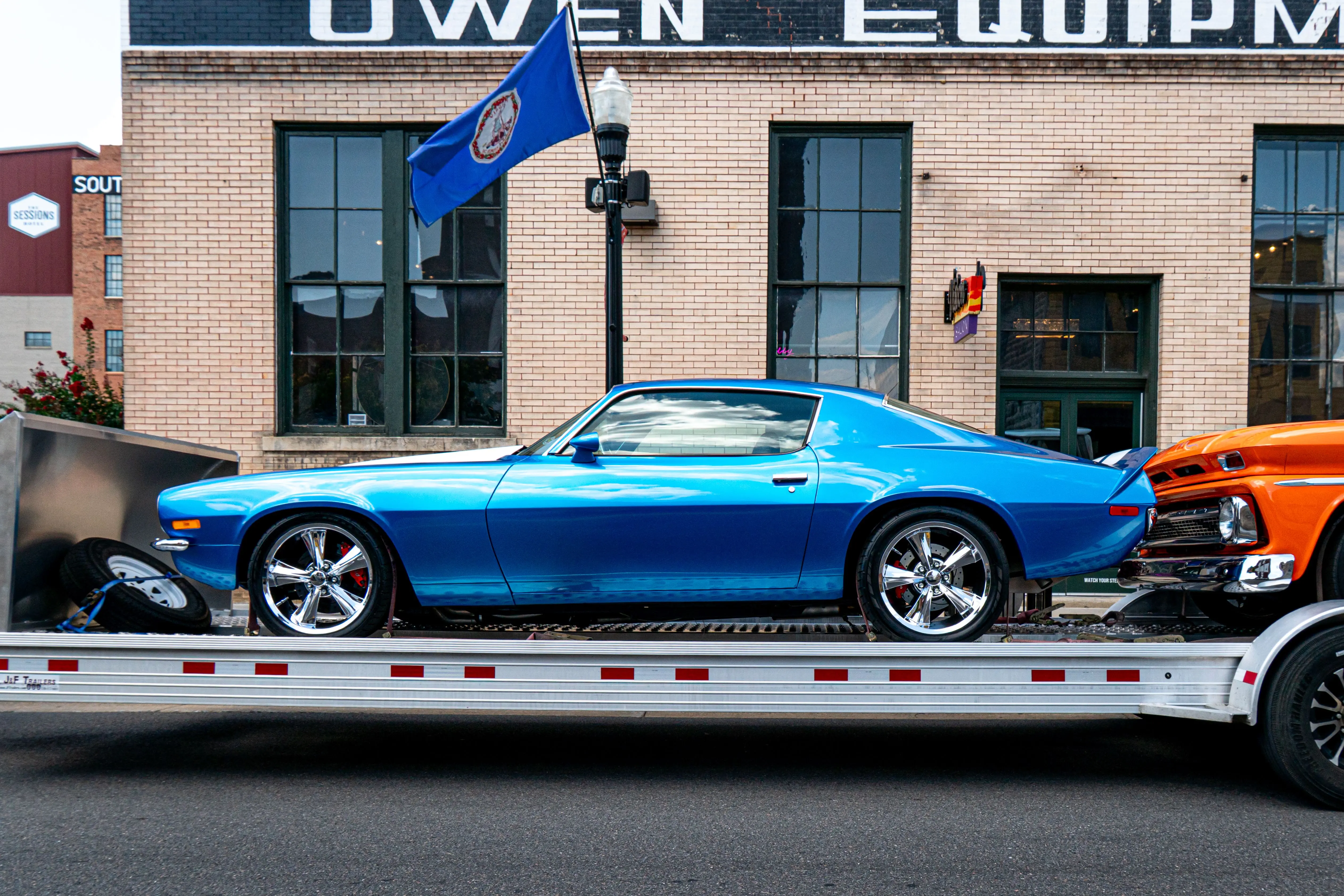
Open transporters are the standard option and perfectly safe for most vehicles. Enclosed transport makes sense for classics, high-value cars and anything with very low ground clearance.
Keep the job reference or delivery note. If you later need to evidence the move to an insurer, a workshop or the authorities, that document proves when and how the vehicle was moved.
Before the truck arrives, take the documentation, spare keys and anything valuable out of the vehicle. It travels unaccompanied, and items left inside are not covered as luggage.
Be wary of quotes well below market rate. In vehicle transport, a low price usually means no goods-in-transit insurance, no operating authorisation, or neither.
If the vehicle is in an underground car park, check the clearance height first. Many garages cannot take a transporter and the car has to be brought up to street level.
Keep the job documentation recording the vehicle's condition. It is the reference point if a question about damage and its timing comes up later.
On keyless-start vehicles, remember the fob must travel with you or be handed over at the destination, but never left inside the car in transit. It is a more common oversight than you would think and leaves the vehicle locked on arrival.
Before collection, check no personal documents are left in the glovebox. It is where forgotten paperwork most often turns up, and some of it contains details you would not want travelling unsupervised.
A vehicle leaking oil or fuel should be flagged before transport. It does not prevent the move, but it affects where the car sits on the deck and what protection goes underneath it.
Make sure the alarm is disabled, or that the driver knows how to disable it. An alarm going off in transit means stopping and complicates the job for no reason.
Agree who signs for the vehicle at the destination. If it arrives at a closed workshop or an address where nobody is present, the driver cannot simply leave it, and waiting time or a second attempt both cost money.
On long moves, asking how many loading and unloading points the truck has helps explain the timescale. A truck making several stops takes longer than a direct run.
Always ask whether the price covers collection and delivery at the points you need, or refers to a terminal-to-terminal move. The difference in cost and convenience is considerable.
On vehicles with large-diameter wheels and low-profile tyres, the approach to the ramps needs more care. It is worth mentioning so the right angle is prepared and the tyre or rim is not scuffed.
Photograph the vehicle before loading, including all four corners, the roof and underneath if you can. It takes two minutes and settles any later disagreement about a scratch.
Where a tailgate or bonnet no longer closes properly after an impact, secure it before loading. A tailgate that springs open at eighty kilometres an hour is a genuine hazard to other traffic.
If the move includes a sea crossing, check what documentation the ferry operator requires for the vehicle. The registration document and owner details are usually needed, and a missing paper means missing the sailing.
If you need the vehicle by a fixed, immovable date, say so when booking rather than afterwards. With enough notice it can almost always be accommodated; with twenty-four hours, often not.
In summary
Car Transport 247 works across A Coruña and the whole of Spain, 24 hours a day, with goods-in-transit cover for the journey and the price fixed before we start. Tell us your situation and we will give you an honest answer on how it works and what it costs.
Had an accident in A Coruña?
We recover at any hour and take the vehicle to the garage or compound you need. Fixed quote.