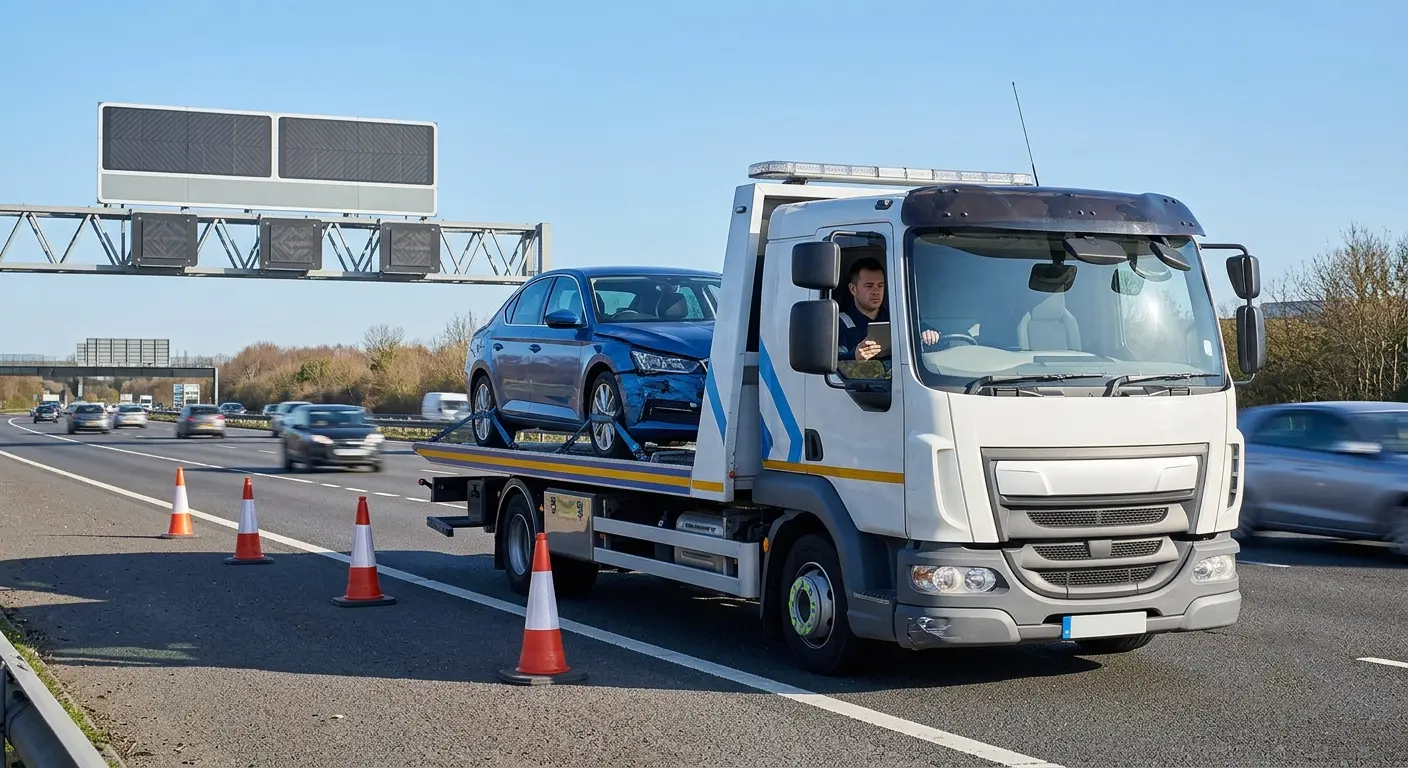
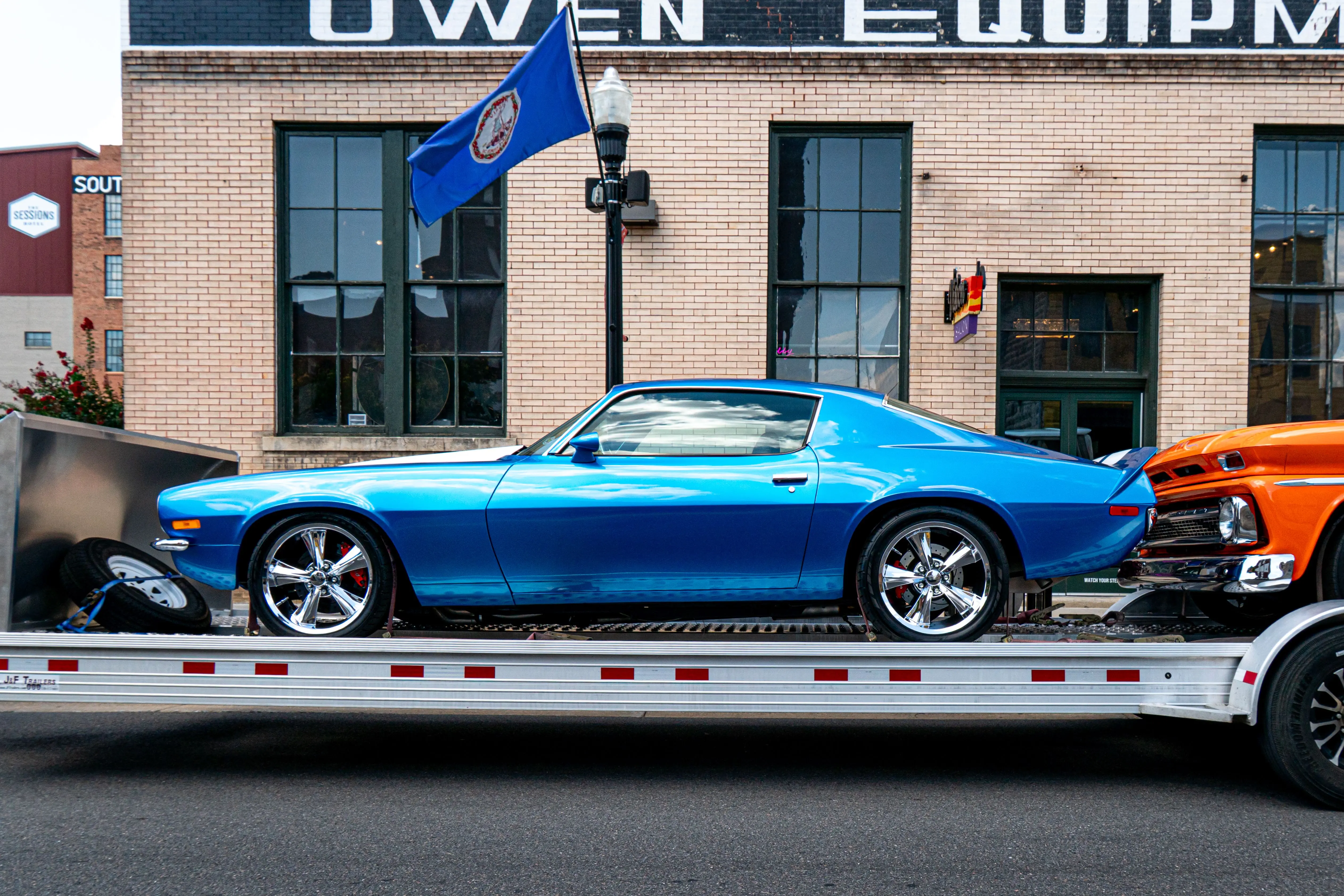
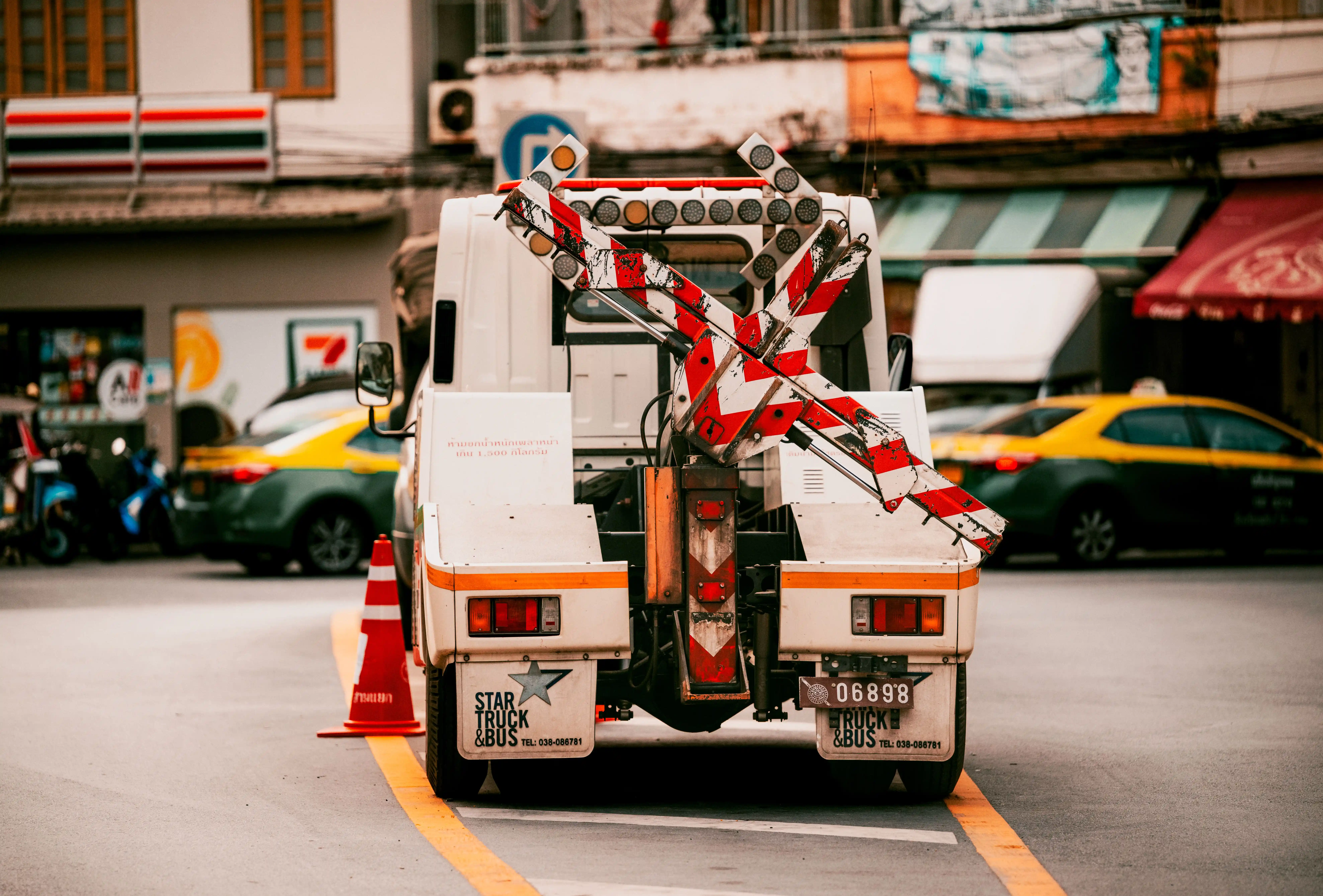
The question that decides how we approach a job is not whether the car starts but whether the wheels turn. A vehicle that rolls goes onto the truck by winch; one with locked wheels needs skates. In León we carry the equipment for both, as long as we are told in advance.
The street layout in central León was not designed for car transporters. Knowing the street width, the timed restrictions and where a truck can actually turn is what separates a clean collection from a wasted afternoon.
What makes León different
It helps to set the context before going into detail. León is a key point on the Camino de Santiago and the north-west corridor via the A-66 and AP-71. The Pajares pass shapes winter access towards Asturias.
The province mixes cereal plains with mountain country in the Cantabrian range. There is more background on the city in its Wikipedia entry.
Buying a car that does not start
Auction purchases of damaged or seized vehicles usually come with a collection deadline, after which storage charges accrue. Arranging transport in advance avoids that cost.
In a private sale it is worth having the change of ownership and insurance resolved before or immediately after the move. The carrier moves the vehicle but plays no part in those formalities.
Preparation that saves time on the day
If the vehicle has stood a long time, the state of the tyres tells you a lot. Completely flat tyres, or sidewalls that have deformed, suggest skates will probably be needed.
It is also worth checking whether the car is in neutral, or whether an automatic can be shifted to neutral. On some models without battery power that requires a specific manual procedure, better known in advance.
Recurring moves for the trade
Garages, dealerships and traders move non-runners regularly: part-exchanges, vehicles awaiting repair, cars destined for dismantling. For them the decisive factor is not the one-off price but reliability of timing.
Grouping several vehicles into one job reduces the cost per unit appreciably. Where there is recurring volume, planning moves in batches is almost always more efficient than handling them one at a time.
Because León is a road junction, long-distance moves from here usually have more route options and therefore more scheduling flexibility.
Cover and liability during transport
Before handing keys to anyone, ask one specific question: is the vehicle covered while it sits on the transporter, for how much, and against what. An operator working legally and registered with the Spanish Ministry of Transport can evidence that without difficulty.
The carrier's cover is not the same as your own motor policy. Your insurance covers driving; during transport it is the carrier's goods-in-transit policy that responds. Confusing the two is behind most of the disputes that arise.
Access: what complicates a collection most
A vehicle in an underground car park is a geometry problem before it is a mechanical one. The transporter cannot go down, so the car has to come up to street level, and if it does not roll that has to be done with auxiliary equipment.
Measuring the entrance clearance and ramp width before the appointment avoids the worst outcome, which is a truck that arrives and can do nothing. A figure as simple as the headroom in metres changes the whole plan.
What the law says about moving a vehicle that cannot be driven
Driving without a current ITV carries a fine and can result in the vehicle being immobilised under the rules the Dirección General de Tráfico (DGT) enforces. There is a larger problem behind it: in the event of an accident, your insurer may reduce or refuse cover entirely.
Royal Decree 920/2017 governing the ITV roadworthiness test allows a limited exception for travelling to a booked inspection, but it does not permit normal use of the vehicle. Any other journey requires it to be carried on a transporter.
Transporting a partly dismantled vehicle
A vehicle under restoration may be dismantled, without wheels, without brakes, or even without an engine. Each of those has a solution, but they need different approaches and sometimes specific lifting equipment.
Securing matters especially here. A vehicle with bodywork in progress does not have its usual anchor points available, so where to strap without deforming anything has to be worked out first.
A car that will not start: the real options
A vehicle is described as a non-runner when it cannot move by itself, whatever the cause — mechanical, electrical, or simply the result of long immobility.
It is worth being precise about the condition when requesting a quote, because a car that rolls and can be pushed is not the same as one with locked wheels. That difference determines the equipment needed and therefore the price.
Other services in León
More on non-runner transport and on the rest of our services. If you would rather we called you, leave your details on the contact page and we will assess your case in León.
Details worth keeping in mind
Make sure the alarm is disabled, or that the driver knows how to disable it. An alarm going off in transit means stopping and complicates the job for no reason.
Flag it if the vehicle has stood unused for a long period. Flat tyres, seized brakes or a completely dead battery all change how it has to be loaded.
Open transporters are the standard option and perfectly safe for most vehicles. Enclosed transport makes sense for classics, high-value cars and anything with very low ground clearance.
If the move includes a sea crossing, check what documentation the ferry operator requires for the vehicle. The registration document and owner details are usually needed, and a missing paper means missing the sailing.
Before confirming, check the quote is fixed rather than an estimate subject to surcharges. Extras for difficult access or a non-rolling vehicle should be clear from the outset.
On long moves, asking how many loading and unloading points the truck has helps explain the timescale. A truck making several stops takes longer than a direct run.
If the move is a private sale, coordinate payment and key handover clearly. The carrier moves the vehicle; it takes no part in the transaction.
If the vehicle has been in an accident, say what is damaged and whether the wheels still turn. A vehicle that will not roll needs a winch and sometimes dollies.
Agree who signs for the vehicle at the destination. If it arrives at a closed workshop or an address where nobody is present, the driver cannot simply leave it, and waiting time or a second attempt both cost money.
Moving several vehicles together usually works out considerably cheaper per unit than separate jobs. If you have more than one to move, it is worth quoting them as one.
On moves crossing several autonomous communities, bear in mind that heavy vehicle driving restrictions vary at weekends and on public holidays. That can affect the specific delivery day.
For vehicles with bulky modifications or accessories — roof racks, bike carriers, bull bars — mention them. They can affect the overall height of the loaded truck and whether it clears certain access points.
If the vehicle contains fuel cans or any flammable material, remove it beforehand. Dangerous goods transport is governed by its own regulations and cannot travel mixed in with the vehicle.
Photograph the vehicle before loading, including all four corners, the roof and underneath if you can. It takes two minutes and settles any later disagreement about a scratch.
Realistic timescales depend on distance and route, not optimism. A company that promises any deadline without asking where the vehicle is probably will not meet it.
If you are selling the vehicle and the buyer arranges transport, put in writing when responsibility passes. It is normally at key handover, but both parties benefit from having it stated.
In low-emission zones, verify whether the transport truck can enter during the planned time window. Many restrictions apply to heavy vehicles even where the car being carried would itself be allowed through.
Keep the job reference or delivery note. If you later need to evidence the move to an insurer, a workshop or the authorities, that document proves when and how the vehicle was moved.
Have the vehicle and ownership documents ready. On moves ending at a port terminal or crossing a border, that paperwork matters as much as the vehicle itself.
Check whether your own policy covers the vehicle while it sits at a third-party workshop or compound. It is a frequent gap between the end of transport and the start of repair, and worth clarifying.
Check the overall height if the vehicle is a van, a camper or a 4x4 with roof accessories. The vehicle's height plus the deck height determines what the loaded truck can pass under.
Where a tailgate or bonnet no longer closes properly after an impact, secure it before loading. A tailgate that springs open at eighty kilometres an hour is a genuine hazard to other traffic.
If the destination is an ITV test station, confirm you have a booked appointment and the time. Matching the vehicle's arrival to the appointment slot avoids long waits and a second visit.
Bear in mind that in peak periods — summer, or the start and end of the season — lead times stretch. Booking ahead is the simple way around it.
If you will not be present at collection or delivery, put in writing who hands over and who receives the keys, with a phone number. This is the single most common cause of avoidable delay.
Battery condition matters even for a transport job. If the vehicle has to move a few metres under its own power to get out of a garage or a parking bay, a live battery saves time and avoids resorting to auxiliary equipment.
If the vehicle is on rural land or at the end of an unsurfaced track, state the distance from the tarmac road. An articulated truck cannot enter every lane, and sometimes the car has to be brought out to a meeting point.
If you need the vehicle by a fixed, immovable date, say so when booking rather than afterwards. With enough notice it can almost always be accommodated; with twenty-four hours, often not.
Check the handbrake works and that the vehicle can be secured on the deck. If it cannot, there are solutions, but it is better known in advance.
In summary
If you need a vehicle moved in León, the most useful thing is an assessment of your specific situation. We give you a total price and a realistic timescale, not a per-kilometre rate that grows later.
Got a car that will not start in León?
Tell us where it is, where it is going, and whether the wheels turn. That is enough for a fixed price.