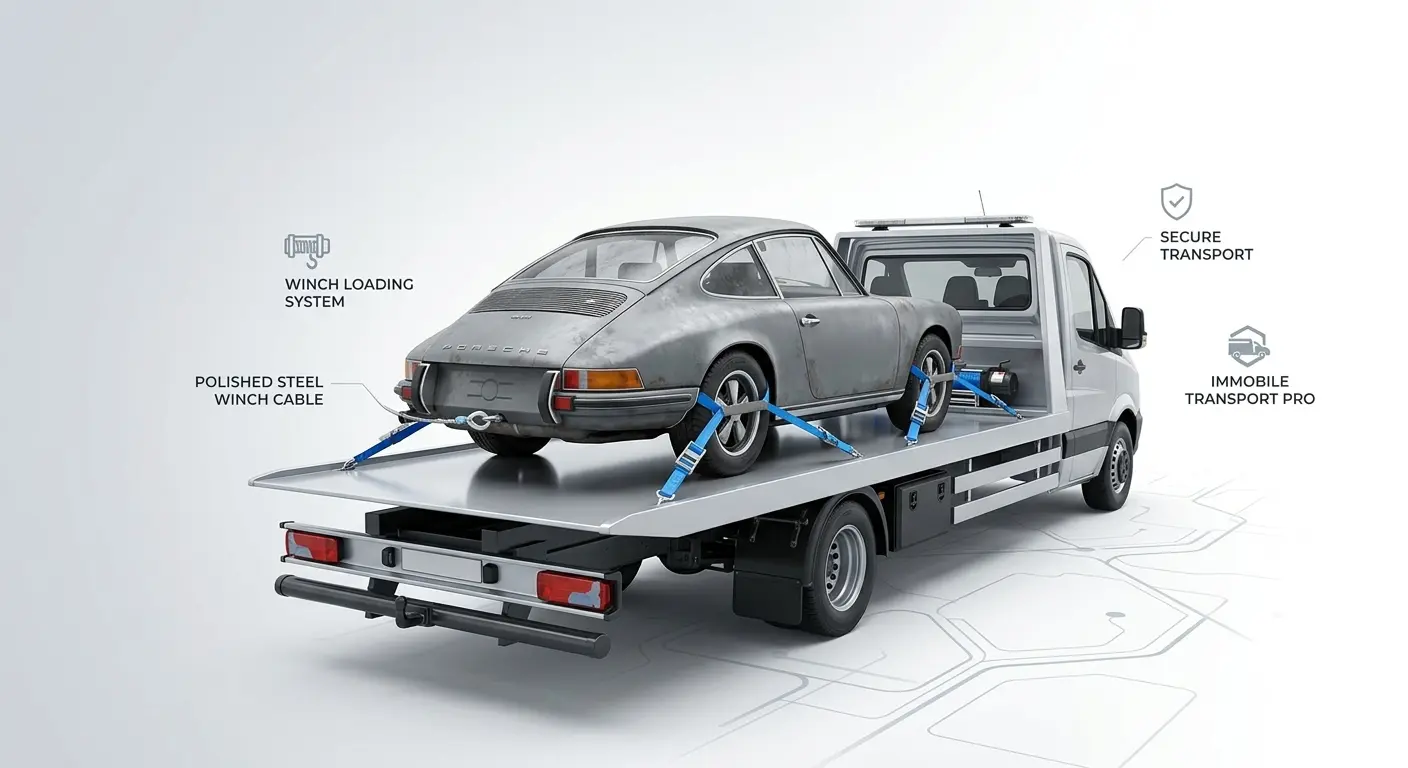
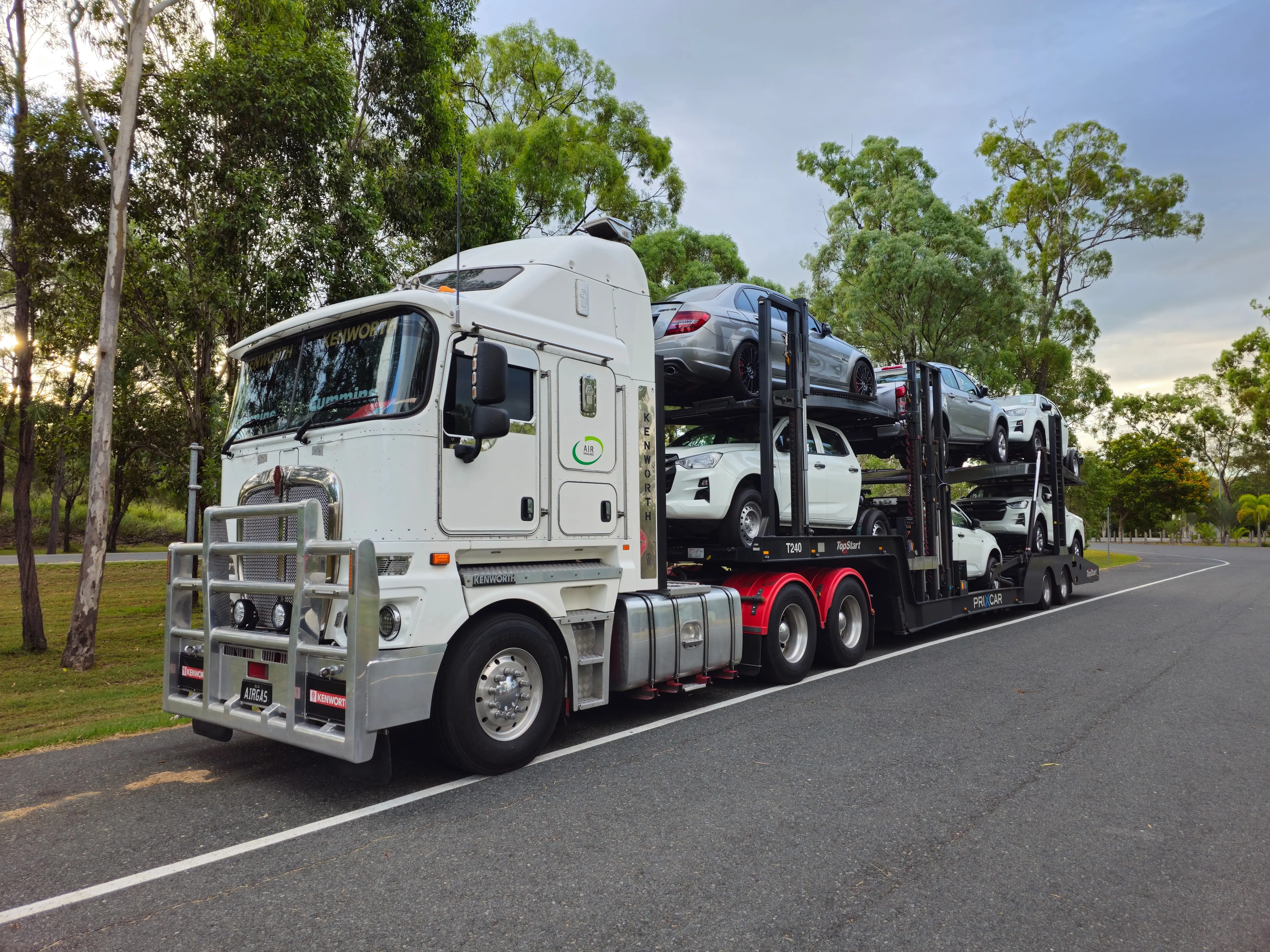
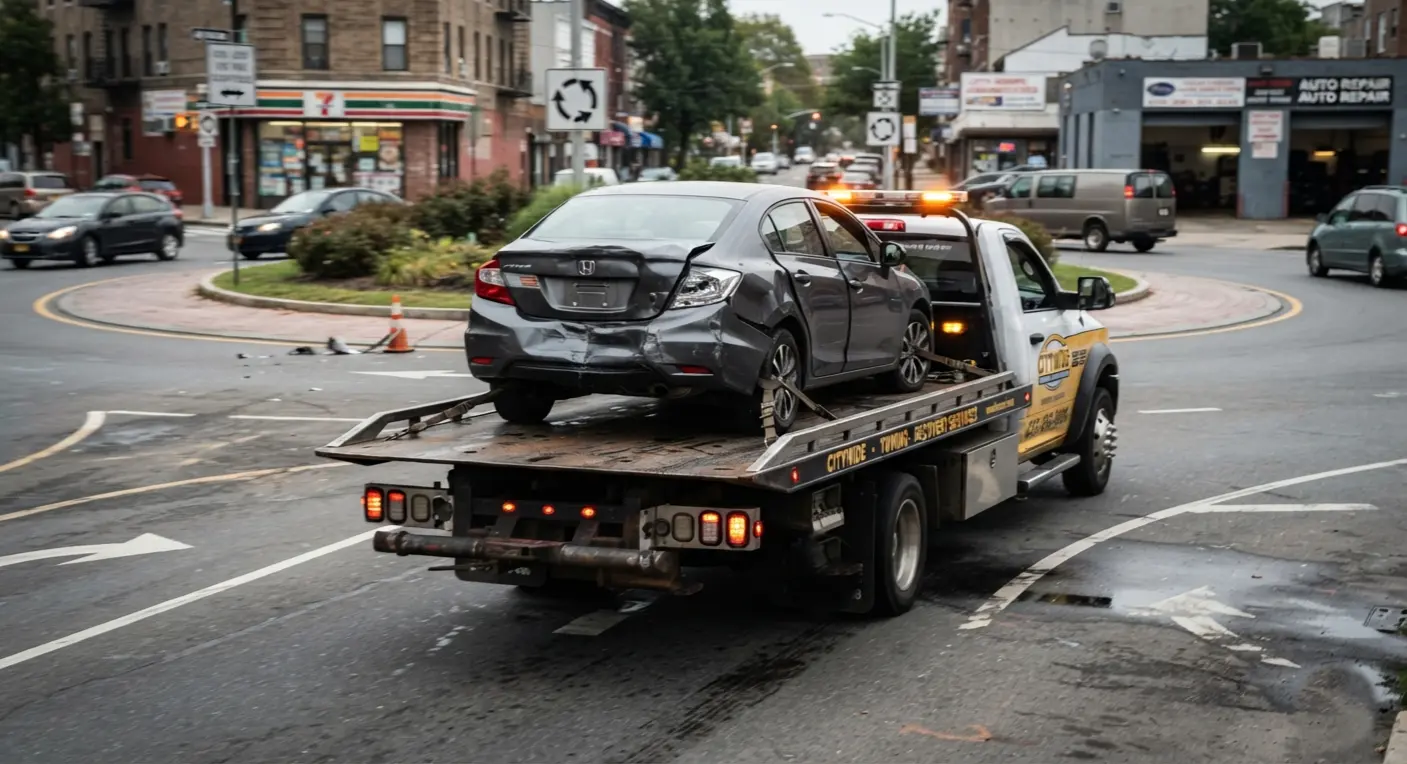
A motorcycle does not travel like a car. It stands on two wheels, has to be held upright, and the straps need to compress the forks by exactly the right amount — no more, no less. We transport motorcycles across Palma de Mallorca with a front wheel chock and securing at frame points, which is what stops a bike arriving with marked fairings.
In Palma de Mallorca the timescale is set by the ship, not the road. The land legs can be done in a day, but the crossing and the loading formalities impose their own calendar, especially in peak season when space is scarce.
Palma de Mallorca: how the area shapes the job
Tourist seasonality drives summer demand sharply upward and ferry space gets tight. The Tramuntana range has narrow mountain roads that require a suitably sized recovery vehicle.
Every vehicle move between Mallorca and the mainland goes by ship, which adds sailing schedules and specific paperwork. For general background on the area, the Palma de Mallorca entry on Wikipedia covers the basics.
The price of motorcycle transport
A fixed price needs four things: origin, destination, approximate model and condition. With those the job can be confirmed without extras appearing later.
On long journeys the cost per kilometre falls markedly. For a bike facing an 800-kilometre ride, transport often pays for itself on avoided wear alone.
Transport insurance: the question always worth asking
Before handing keys to anyone, ask one specific question: is the vehicle covered while it sits on the transporter, for how much, and against what. An operator working legally and registered with the Spanish Ministry of Transport can evidence that without difficulty.
The carrier's cover is not the same as your own motor policy. Your insurance covers driving; during transport it is the carrier's goods-in-transit policy that responds. Confusing the two is behind most of the disputes that arise.
Preparing the motorcycle for transport
Leaving the tank low is advisable for both weight and safety. Folding the mirrors where possible and protecting the most exposed components also helps.
If the bike has anything unusual — modified suspension, a protruding exhaust, carbon bodywork — mentioning it allows the right protection to be prepared before loading.
Sailing availability from Palma de Mallorca varies considerably through the year, and in summer it can determine the delivery date more than any other factor.
Getting the bike to an event
Track days and rallies create a specific need: getting the bike there without using it on the road, either because it is track-prepared and not road legal, or to arrive rested with the machine in perfect condition.
A track-prepared motorcycle without lights or a registration plate cannot be used on public roads at all. Moving it necessarily requires transport.
Transporting several motorcycles at once
Moving several motorcycles on one job costs considerably less per unit than separate transports. It is the natural option for clubs, groups travelling to an event, and dealerships.
On multiple transports, spacing and layout matter: the bikes must not touch each other in transit, which is handled with separators and individual securing for each machine.
When the motorcycle will not start
On motorcycles the battery is the number one cause, particularly after a period standing, because bike batteries are small and discharge easily. Electrical faults, transmission failures and punctures follow.
Punctures deserve separate mention because a motorcycle carries no spare and, in many cases, cannot be repaired at the roadside. With a tubeless tyre and a sidewall cut, transport is the only option.
The legal position: when transport stops being optional
A vehicle without a valid ITV, without insurance, or on temporary deregistration cannot legally be driven on public roads. The Dirección General de Tráfico (DGT) is unambiguous here, and the penalty falls on the registered keeper. Moving it by truck is not a matter of preference — it is the only lawful option.
Royal Decree 920/2017 governing the ITV roadworthiness test sets out the narrow circumstances in which a vehicle may travel to a test station, and outside that specific case driving it is prohibited. That distinction is worth understanding before assuming you can drive to the garage.
Every type of bike is a different problem
Weight matters too. A loaded adventure bike with panniers can comfortably exceed 250 kilos, and manhandling that up a ramp is neither reasonable nor safe for anyone.
On fully faired bikes it is worth removing or protecting the most exposed parts before transport. A mirror or indicator broken by contact during loading is the most avoidable kind of damage there is.
Other services in Palma de Mallorca
Motorcycles in other cities
More on motorcycle transport and on the rest of our services. If you would rather we called you, leave your details on the contact page and we will assess your case in Palma de Mallorca.
Practical advice for your move
If the vehicle has any quirk — lowered suspension, an automatic gearbox locked in park, a flat battery — mention it when requesting the quote so the right equipment turns up.
Before collection, check no personal documents are left in the glovebox. It is where forgotten paperwork most often turns up, and some of it contains details you would not want travelling unsupervised.
Always ask whether the price covers collection and delivery at the points you need, or refers to a terminal-to-terminal move. The difference in cost and convenience is considerable.
Bear in mind that in peak periods — summer, or the start and end of the season — lead times stretch. Booking ahead is the simple way around it.
Know where the spare wheel and tools are if the vehicle carries them. On long moves, a loose item in the boot shifts during the journey and can damage the interior or the trim.
Agree who signs for the vehicle at the destination. If it arrives at a closed workshop or an address where nobody is present, the driver cannot simply leave it, and waiting time or a second attempt both cost money.
An accessible collection point saves both time and money. If the street is narrow or the garage has restricted headroom, agreeing a nearby spot where the truck can manoeuvre simplifies everything.
Get the name and number of the driver handling the job, or at least a direct operational contact. On the day, being able to resolve a question in two minutes prevents an hour of waiting.
If the move is a private sale, coordinate payment and key handover clearly. The carrier moves the vehicle; it takes no part in the transaction.
Check whether your own policy covers the vehicle while it sits at a third-party workshop or compound. It is a frequent gap between the end of transport and the start of repair, and worth clarifying.
Before confirming, check the quote is fixed rather than an estimate subject to surcharges. Extras for difficult access or a non-rolling vehicle should be clear from the outset.
Open transporters are the standard option and perfectly safe for most vehicles. Enclosed transport makes sense for classics, high-value cars and anything with very low ground clearance.
Check the handbrake works and that the vehicle can be secured on the deck. If it cannot, there are solutions, but it is better known in advance.
If the vehicle will sit on a public street waiting for collection, check there are no timed restrictions or scheduled clearing on that road. A car towed by the local authority while waiting for transport complicates matters considerably and adds costs nobody planned for.
If you need the vehicle by a fixed, immovable date, say so when booking rather than afterwards. With enough notice it can almost always be accommodated; with twenty-four hours, often not.
Moving several vehicles together usually works out considerably cheaper per unit than separate jobs. If you have more than one to move, it is worth quoting them as one.
If you are selling the vehicle and the buyer arranges transport, put in writing when responsibility passes. It is normally at key handover, but both parties benefit from having it stated.
If the destination is an ITV test station, confirm you have a booked appointment and the time. Matching the vehicle's arrival to the appointment slot avoids long waits and a second visit.
Keep the job documentation recording the vehicle's condition. It is the reference point if a question about damage and its timing comes up later.
Realistic timescales depend on distance and route, not optimism. A company that promises any deadline without asking where the vehicle is probably will not meet it.
Battery condition matters even for a transport job. If the vehicle has to move a few metres under its own power to get out of a garage or a parking bay, a live battery saves time and avoids resorting to auxiliary equipment.
Flag it if the vehicle has stood unused for a long period. Flat tyres, seized brakes or a completely dead battery all change how it has to be loaded.
On moves crossing several autonomous communities, bear in mind that heavy vehicle driving restrictions vary at weekends and on public holidays. That can affect the specific delivery day.
Be wary of quotes well below market rate. In vehicle transport, a low price usually means no goods-in-transit insurance, no operating authorisation, or neither.
Where a tailgate or bonnet no longer closes properly after an impact, secure it before loading. A tailgate that springs open at eighty kilometres an hour is a genuine hazard to other traffic.
If you will not be present at collection or delivery, put in writing who hands over and who receives the keys, with a phone number. This is the single most common cause of avoidable delay.
On classic vehicles with carburettors or older systems, say whether the engine needs any particular starting procedure. If it has to be moved even a few metres, that information saves time.
On long moves, asking how many loading and unloading points the truck has helps explain the timescale. A truck making several stops takes longer than a direct run.
Before the truck arrives, take the documentation, spare keys and anything valuable out of the vehicle. It travels unaccompanied, and items left inside are not covered as luggage.
In summary
If you need a vehicle moved in Palma de Mallorca, the most useful thing is an assessment of your specific situation. We give you a total price and a realistic timescale, not a per-kilometre rate that grows later.
Need your bike moved in Palma de Mallorca?
Breakdowns, drops, track days or purchases. Free quote with no hidden extras.