Driving a thousand kilometres to move a car costs more than it looks: fuel, tolls, a night away, meals, real wear and a whole day of your time. Once you total it up, the gap against transport is far smaller than most people assume. We move vehicles from Palencia to anywhere in Spain.
In an automotive centre like Palencia, moves often carry a different kind of urgency. A stranded vehicle may be holding up a delivery or a chain of repairs, not just someone's personal plans.
Moving a vehicle in Palencia: what to know
It helps to set the context before going into detail. Despite its modest size, Palencia concentrates automotive industry and associated logistics. The A-62 and A-67 place it at the crossing of the Burgos-Portugal and Cantabria-plateau axes.
The rural surroundings mean scattered collection points and longer approach runs. There is more background on the city in its Wikipedia entry.
Deciding whether to make the journey
Three situations favour transport clearly: when the vehicle's value makes added mileage undesirable, when nobody can spare the day, and when the car is not in a condition to make a long journey.
The return trip counts too. If someone drives the car to the destination, they then have to get back, and that train or plane ticket belongs in a calculation almost nobody makes.
Classics, sports cars and high-value vehicles
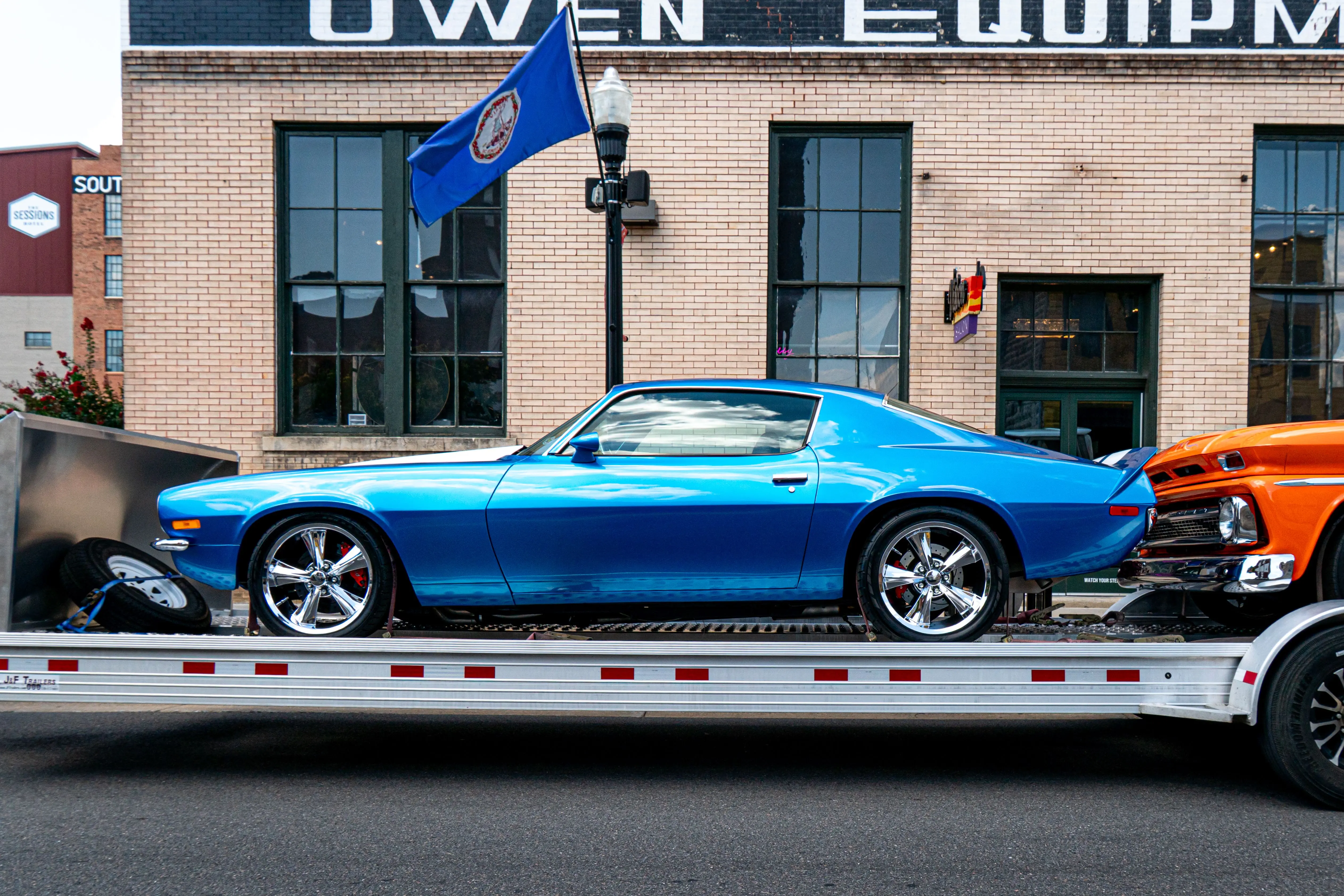
On a classic, every kilometre counts twice: it adds wear to mechanicals that are hard to repair and exposes the bodywork to stones, insects and weather. Enclosed transport addresses both.
Sports cars with low ground clearance add a loading problem: they need shallow-angle ramps or skates so the underside and front splitter do not ground while going up.
Getting a vehicle to the islands
The timescale for an island move is set by the sailing calendar rather than the road distance. A vehicle can be at the port within a day and then wait for the next available crossing.
Booking ahead matters in summer, when demand for vehicle space rises sharply and dates close out weeks in advance.
How your vehicle is covered while it is being moved
Before handing keys to anyone, ask one specific question: is the vehicle covered while it sits on the transporter, for how much, and against what. An operator working legally and registered with the Spanish Ministry of Transport can evidence that without difficulty.
The carrier's cover is not the same as your own motor policy. Your insurance covers driving; during transport it is the carrier's goods-in-transit policy that responds. Confusing the two is behind most of the disputes that arise.
For workshops and dealerships in Palencia, a predictable timescale usually matters more than price: a late vehicle disrupts the whole workshop schedule.
When more than one car needs moving
For businesses with recurring needs, what matters is not the headline rate but reliability of timing and ease of coordination. A vehicle that does not arrive when expected carries a cost that never appears on the transport invoice.
Grouping moves on the same route allows prices to be adjusted meaningfully. Where volume is predictable, planning in batches is almost always more efficient.
The legal position: when transport stops being optional
Driving without a current ITV carries a fine and can result in the vehicle being immobilised under the rules the Dirección General de Tráfico (DGT) enforces. There is a larger problem behind it: in the event of an accident, your insurer may reduce or refuse cover entirely.
Royal Decree 920/2017 governing the ITV roadworthiness test allows a limited exception for travelling to a booked inspection, but it does not permit normal use of the vehicle. Any other journey requires it to be carried on a transporter.
What sits behind the quote
On long journeys the cost per kilometre falls clearly, because the fixed cost of the job spreads over more distance. Ask for the total price rather than reasoning from a per-kilometre rate.
A fixed quote should specify what is included: collection, delivery, goods-in-transit cover for the journey and any access conditions. Extras belong in the conversation beforehand, not afterwards.
The two ways of moving a car
The open transporter is the industry standard: safe, widely available and considerably cheaper. The vehicle travels exposed to the weather, exactly as it would be if driven, but fully secured.
Enclosed transport shields from weather and from view, and makes sense for classics, high-value vehicles and delicate paintwork. It costs more and availability is lower, so it is worth booking further ahead.
Other services in Palencia
Nationwide transport in other cities
More on nationwide vehicle transport and on the rest of our services. If you would rather we called you, leave your details on the contact page and we will assess your case in Palencia.
Practical advice for your move
Check whether your own policy covers the vehicle while it sits at a third-party workshop or compound. It is a frequent gap between the end of transport and the start of repair, and worth clarifying.
Photograph the vehicle before loading, including all four corners, the roof and underneath if you can. It takes two minutes and settles any later disagreement about a scratch.
Always ask whether the price covers collection and delivery at the points you need, or refers to a terminal-to-terminal move. The difference in cost and convenience is considerable.
On moves crossing several autonomous communities, bear in mind that heavy vehicle driving restrictions vary at weekends and on public holidays. That can affect the specific delivery day.
A vehicle leaking oil or fuel should be flagged before transport. It does not prevent the move, but it affects where the car sits on the deck and what protection goes underneath it.
Agree who signs for the vehicle at the destination. If it arrives at a closed workshop or an address where nobody is present, the driver cannot simply leave it, and waiting time or a second attempt both cost money.
If the collection is from a building with a communal garage, tell the manager or concierge. A transporter manoeuvring on a shared ramp without warning creates avoidable friction with neighbours.
On keyless-start vehicles, remember the fob must travel with you or be handed over at the destination, but never left inside the car in transit. It is a more common oversight than you would think and leaves the vehicle locked on arrival.
Ask whether the price includes waiting time at loading and unloading. On moves to workshops, dealerships or compounds with slow procedures, that time can stretch, and it is worth knowing in advance how it is counted.
Get the name and number of the driver handling the job, or at least a direct operational contact. On the day, being able to resolve a question in two minutes prevents an hour of waiting.
On long moves, asking how many loading and unloading points the truck has helps explain the timescale. A truck making several stops takes longer than a direct run.
If the vehicle is on rural land or at the end of an unsurfaced track, state the distance from the tarmac road. An articulated truck cannot enter every lane, and sometimes the car has to be brought out to a meeting point.
If you need the vehicle by a fixed, immovable date, say so when booking rather than afterwards. With enough notice it can almost always be accommodated; with twenty-four hours, often not.
Leave the fuel tank low, around a quarter. It reduces weight, follows standard transport practice, and there is nothing to gain from a full tank during the journey.
If the destination is an ITV test station, confirm you have a booked appointment and the time. Matching the vehicle's arrival to the appointment slot avoids long waits and a second visit.
Check the handbrake works and that the vehicle can be secured on the deck. If it cannot, there are solutions, but it is better known in advance.
Keep the job documentation recording the vehicle's condition. It is the reference point if a question about damage and its timing comes up later.
If the vehicle has any quirk — lowered suspension, an automatic gearbox locked in park, a flat battery — mention it when requesting the quote so the right equipment turns up.
Bear in mind that in peak periods — summer, or the start and end of the season — lead times stretch. Booking ahead is the simple way around it.
If you will not be present at collection or delivery, put in writing who hands over and who receives the keys, with a phone number. This is the single most common cause of avoidable delay.
Realistic timescales depend on distance and route, not optimism. A company that promises any deadline without asking where the vehicle is probably will not meet it.
On vehicles with large-diameter wheels and low-profile tyres, the approach to the ramps needs more care. It is worth mentioning so the right angle is prepared and the tyre or rim is not scuffed.
If the move includes a sea crossing, check what documentation the ferry operator requires for the vehicle. The registration document and owner details are usually needed, and a missing paper means missing the sailing.
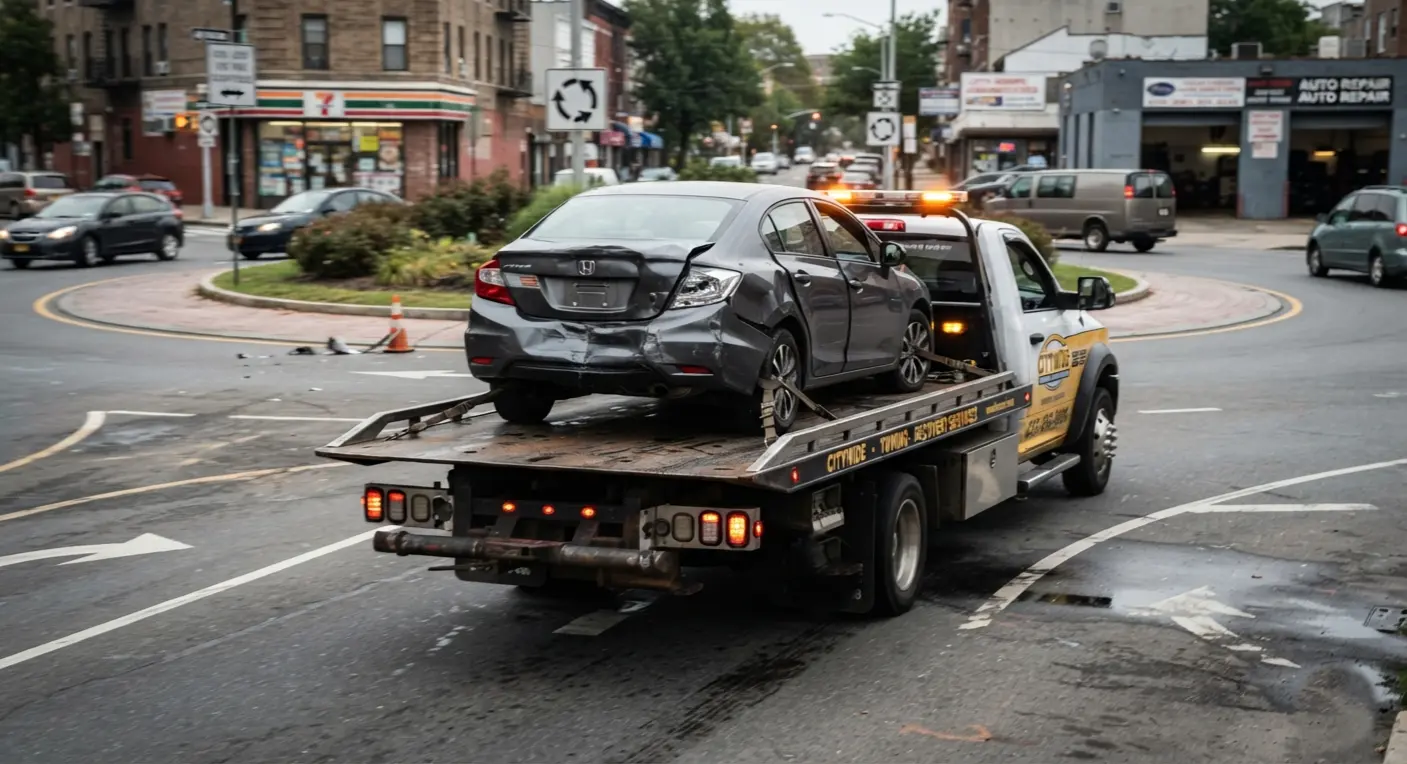
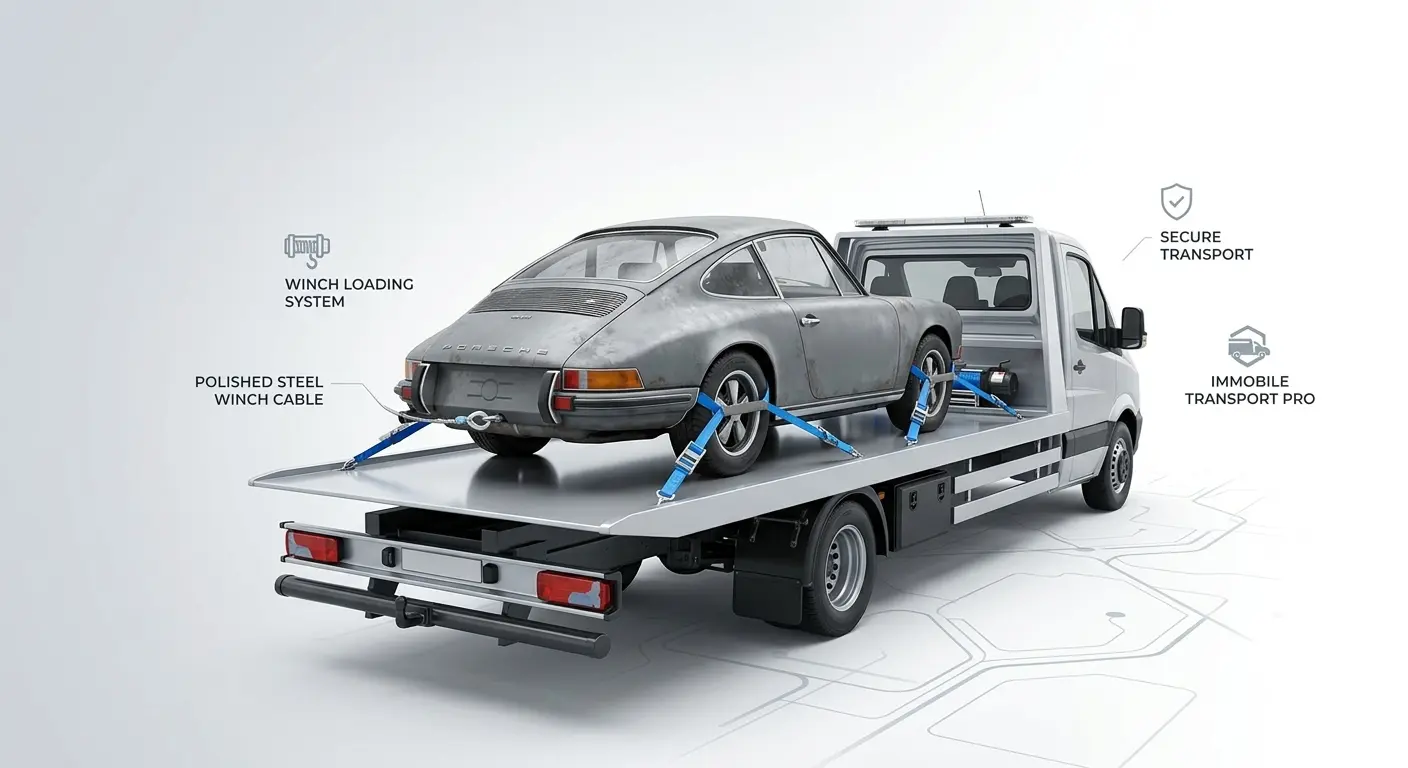
If the vehicle has been in an accident, say what is damaged and whether the wheels still turn. A vehicle that will not roll needs a winch and sometimes dollies.
Make sure the alarm is disabled, or that the driver knows how to disable it. An alarm going off in transit means stopping and complicates the job for no reason.
On classic vehicles with carburettors or older systems, say whether the engine needs any particular starting procedure. If it has to be moved even a few metres, that information saves time.
Open transporters are the standard option and perfectly safe for most vehicles. Enclosed transport makes sense for classics, high-value cars and anything with very low ground clearance.
For vehicles with bulky modifications or accessories — roof racks, bike carriers, bull bars — mention them. They can affect the overall height of the loaded truck and whether it clears certain access points.
Flag it if the vehicle has stood unused for a long period. Flat tyres, seized brakes or a completely dead battery all change how it has to be loaded.
If the vehicle is in an underground car park, check the clearance height first. Many garages cannot take a transporter and the car has to be brought up to street level.
In summary
In short: in Palencia what makes the difference is a realistic timescale, a fixed price with no extras, and a move documented from start to finish. That is exactly what we provide, at any hour.
Shall we move your car from Palencia?
Several vehicles in one consignment works out considerably better. Ask us about your case.